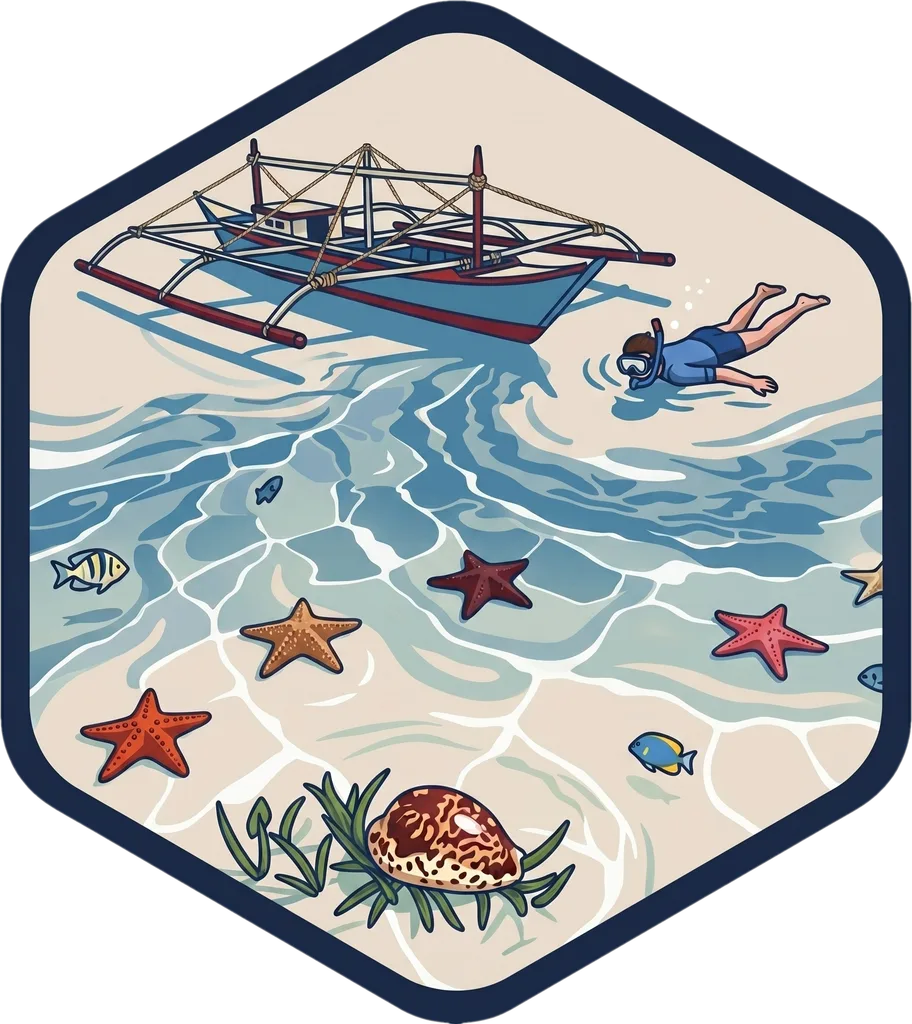
From root: dagat
Conjugations
Past (Completed)
nagdagat
nag-DA-gat
went to the sea
Present (Incomplete)
nagdadagat
nag-da-DA-gat
going to the sea
Future (Contemplated)
magdadagat
mag-da-DA-gat
will go to the sea
Usage Note
Magdagat is used in casual conversation to describe the act of going to the sea or beach for recreation. It functions as a more concise, colloquial alternative to the phrase 'pumunta sa dagat.'
Examples
" Magdagat tayo bukas. "
Natural Translation
Let's go to the sea tomorrow.
Literal Translation
Go-to-sea we tomorrow.
" Magdagat tayo sa tag-init. "
Natural Translation
Let’s go to the sea in summer.
Literal Translation
Go to sea we in summer.
" Tuwing bakasyon ay nagdadagat ang buong pamilya namin para magpahinga at lumayo sa ingay ng lungsod. "
Natural Translation
Every vacation our whole family goes to the sea to rest and get away from the noise of the city.
Literal Translation
Every vacation go-to-sea the whole family our for to-rest and get-away from noise of-the city.
Take Tagalog with you
The full course, a 12,500-word dictionary, and flashcards that make every word stick — free to start on iOS and Android.




Tagalog builds thousands of words from a few hundred roots.
How Tagalog words workWord family
dagat has 9 related forms built from the same root.
Related Words
Explore Tagalog by topic
Free guides on grammar, vocabulary, and culture to take you past single-word lookups.

Tagalog Word Order: Sentence Structure Made Simple
Why Tagalog puts the verb first, and how ang, ng, and sa markers work. A clear guide to VSO word order, forming questions, and negation.

Tagalog Slang Guide: 20 Words You'll Hear on TikTok
Tagalog slang explained: lodi, petmalu, werpa, astig, chika and more. Decode Filipino TikTok comments, group chats, and pop culture with this practical guide.

Ng vs Nang in Tagalog: The Spelling Rule
Ng vs nang sound identical but spell differently. Use ng to mark nouns (of, the object), and nang for how, when, repetition, and counting time.

Tagalog Numbers 1-100: Counting, Time & Money Explained
Learn Tagalog numbers 1-100 and beyond. Master both native and Spanish-derived counting systems, plus telling time, reading prices, and ordinals.