makidamay
makidamáy with stress marks
to sympathize
From root: damay
Conjugations
Past (Completed)
nakidamay
na-ki-da-MAY
sympathized
Present (Incomplete)
nakikidamay
na-ki-ki-da-MAY
is sympathizing
Future (Contemplated)
makikidamay
ma-ki-ki-da-MAY
will sympathize
Usage Note
Makidamay is built with the maki- social-participation prefix on the root damay, expressing joining others in shared grief, mourning, or sympathetic feeling. The related form nakikiramay is the standard formula in condolence expressions, reflecting the Filipino cultural emphasis on communal solidarity in times of loss.
Examples
" Pumunta kami para makidamay. "
Natural Translation
We came to sympathize.
Literal Translation
Came we to sympathize.
" Pumunta sila roon para makidamay sa pamilya. "
Natural Translation
They went there to sympathize with the family.
Literal Translation
Went they there in order to sympathize with family.
" Kahit malayo ang biyahe, nakidamay pa rin siya sa naulila para ipakita ang tunay na pagmamahal. "
Natural Translation
Even though the trip was far, she still came to sympathize with the bereaved to show genuine love.
Literal Translation
Even far the trip, sympathized still she with bereaved to show the true love.
Take Tagalog with you
The full course, a 12,500-word dictionary, and flashcards that make every word stick — free to start on iOS and Android.




Tagalog builds thousands of words from a few hundred roots.
How Tagalog words workWord family
damay has 1 related form built from the same root.
Related Words
Explore Tagalog by topic
Free guides on grammar, vocabulary, and culture to take you past single-word lookups.

Tagalog Word Order: Sentence Structure Made Simple
Why Tagalog puts the verb first, and how ang, ng, and sa markers work. A clear guide to VSO word order, forming questions, and negation.

Is Tagalog Hard to Learn? An Honest Answer
Tagalog takes around 1,100 hours to reach professional proficiency. Here is what is easy, what is hard, and what to expect at 3, 6, and 12 months.

Tagalog Time Expressions: Past, Present & Future Guide
Tagalog has no tenses — it uses aspect. Learn time words, days of the week, clock time, and the aspect system, with vocabulary tables and cultural notes.
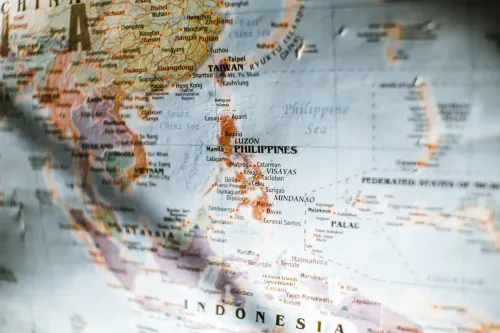
Philippines Geography for Learners: Islands & Language
Philippines geography for Tagalog learners: 7,641 islands, three island groups, and the Southern Luzon heartland where the Tagalog language was born.