deskarga
deskárga with stress marks
discharge; unload
Usage Note
Deskarga, from Spanish descarga, is used in logistics and shipping to describe the unloading of cargo from vessels or vehicles. In informal usage it can also refer to discharging a battery or releasing energy; port workers and truckers commonly use this term in their daily work.
Examples
" Tapos na ang deskarga ng barko. "
Natural Translation
The unloading of the ship is finished.
Literal Translation
Finished already the unloading of-the ship.
" Nagtayo sila ng grupo para sa deskarga ng mga kalakal. "
Natural Translation
They formed a team for unloading the goods.
Literal Translation
Formed they a group for the unloading of goods.
" Naantala ang deskarga ng mga kalakal sa pantalan dahil sa malakas na ulan kagabi. "
Natural Translation
The unloading of the goods at the port was delayed because of the heavy rain last night.
Literal Translation
Was-delayed the unloading of the goods at-the port because of strong rain last-night.
Take Tagalog with you
The full course, a 12,500-word dictionary, and flashcards that make every word stick — free to start on iOS and Android.




Tagalog builds thousands of words from a few hundred roots.
How Tagalog words workActor Focus Verbs
Object Focus Verbs
Related Words
Explore Tagalog by topic
Free guides on grammar, vocabulary, and culture to take you past single-word lookups.
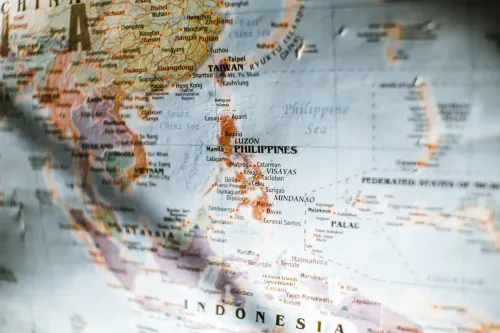
Philippines Geography for Learners: Islands & Language
Philippines geography for Tagalog learners: 7,641 islands, three island groups, and the Southern Luzon heartland where the Tagalog language was born.

Tagalog Time Expressions: Past, Present & Future Guide
Tagalog has no tenses — it uses aspect. Learn time words, days of the week, clock time, and the aspect system, with vocabulary tables and cultural notes.

Tagalog Root Words: Learn a Few Hundred, Understand Thousands
Tagalog root words unlock vocabulary fast: learn a few hundred and recognize thousands. Real word families, examples, and a practical study strategy.

Tagalog Numbers 1-100: Counting, Time & Money Explained
Learn Tagalog numbers 1-100 and beyond. Master both native and Spanish-derived counting systems, plus telling time, reading prices, and ordinals.