
From root: gabi
Conjugations
Past (Completed)
gumabi
gu-ma-BI
became night
Present (Incomplete)
gumagabi
gu-ma-ga-BI
becoming night
Future (Contemplated)
gagabi
ga-ga-BI
will become night
Usage Note
Gumabi is used to describe the transition into nighttime, often appearing in contexts where someone is caught by the late hour while traveling or working. It is frequently encountered in the form 'inabot ng gabi' or 'gagabihin' to express the consequences of staying out late.
Examples
" Gumagabi na, umuwi na tayo. "
Natural Translation
It's getting dark, let's go home.
Literal Translation
Becoming-night already, go-home already we.
" Kailangang gumabi bago tayo umalis. "
Natural Translation
It needs to become night before we leave.
Literal Translation
Need become-night before we leave.
" Madalas kaming gumagabi sa bukid noong anihan dahil ayaw naming may matirang palay na hindi naaani. "
Natural Translation
We often stayed out until night in the field during harvest because we didn't want any rice left ungathered.
Literal Translation
Often we becoming-night in field during harvest because not-want we have left rice that not gathered.
Take Tagalog with you
The full course, a 12,500-word dictionary, and flashcards that make every word stick — free to start on iOS and Android.




Tagalog builds thousands of words from a few hundred roots.
How Tagalog words workWord family
gabi has 7 related forms built from the same root.
Related Words
Explore Tagalog by topic
Free guides on grammar, vocabulary, and culture to take you past single-word lookups.

Tagalog Slang Guide: 20 Words You'll Hear on TikTok
Tagalog slang explained: lodi, petmalu, werpa, astig, chika and more. Decode Filipino TikTok comments, group chats, and pop culture with this practical guide.
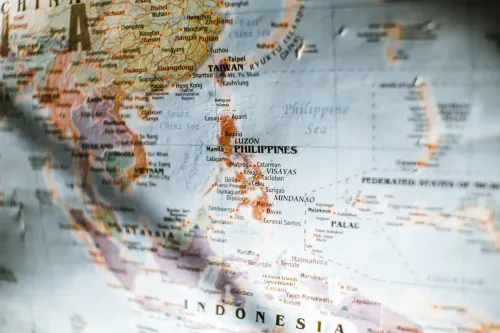
Philippines Geography for Learners: Islands & Language
Philippines geography for Tagalog learners: 7,641 islands, three island groups, and the Southern Luzon heartland where the Tagalog language was born.

How to Say "I Love You" in Tagalog: Phrases & Meaning
Learn how to say I love you in Tagalog. Mahal kita, Iniibig kita, and Filipino terms of endearment for partners, family, and friends — with cultural notes.

Mano Po and Filipino Etiquette: A Visitor's Guide
Mano po presses an elder's hand to your forehead as a blessing. Learn who to mano, how to lip-point, and the etiquette that wins over a Filipino family.