gapasin
gapasín with stress marks
to harvest [it]
From root: gapas
Conjugations
Past (Completed)
ginapas
gi-na-PAS
harvested
Present (Incomplete)
ginagapas
gi-na-ga-PAS
is being harvested
Future (Contemplated)
gagapasin
ga-ga-pa-SIN
will be harvested
Usage Note
Gapasin is the object-focus infinitive of gapas, used when the crop being harvested is the grammatical focus. It specifically refers to cutting grain stalks with a scythe or sickle and is rooted in traditional Philippine rice agriculture, rarely applied outside that context.
Examples
" Gapasin natin ang palay. "
Natural Translation
Let's harvest the rice.
Literal Translation
Harvest we the rice-grain.
" Handa na sila na gapasin ang mga palay. "
Natural Translation
They are ready now to harvest the rice crops.
Literal Translation
Ready now they to harvest the rice-grain.
" Kapag hinog na ang mga butil, gagapasin namin ang buong palayan bago dumating ang malalakas na ulan ng Agosto. "
Natural Translation
Once the grains are ripe, we will harvest the entire rice field before the heavy August rains arrive.
Literal Translation
When ripe already the grains, will-harvest we the whole rice-field before arrives the heavy rains of August.
Take Tagalog with you
The full course, a 12,500-word dictionary, and flashcards that make every word stick — free to start on iOS and Android.




Tagalog builds thousands of words from a few hundred roots.
How Tagalog words workWord family
gapas has 1 related form built from the same root.
Related Words
Explore Tagalog by topic
Free guides on grammar, vocabulary, and culture to take you past single-word lookups.
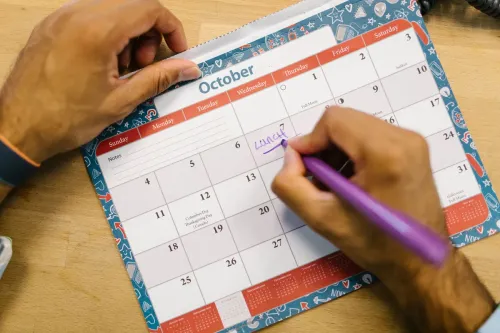
Days of the Week and Months in Tagalog
The days of the week and months in Tagalog are Spanish loanwords. Learn all 7 days and 12 months with pronunciation, plus how to say dates and 'every Monday.'

Na vs -ng in Tagalog: The Linker Rule Made Simple
When do you use na vs -ng in Tagalog? One simple rule, with clear examples, memory tips, and common mistakes explained for English-speaking beginners.

Tagalog Pronouns Explained: Complete Chart with Examples
Every Tagalog pronoun explained with clear charts: ang/ng/sa forms, tayo vs kami, ikaw vs ka, politeness markers, and the mistakes beginners make.

Tagalog Verb Conjugation: Aspects Made Simple
Tagalog verb conjugation uses aspects, not tenses. Learn the three aspects with -um- and mag- verbs, one reduplication rule, and clear example tables.