gerilya
gerílya with stress marks
guerilla
Usage Note
Gerilya comes from Spanish guerrilla and entered Tagalog through the Philippine-American War and World War II, when Filipino guerilla fighters resisted occupation. The term carries strong historical connotations of resistance and patriotism, and is used in historical texts, war literature, and occasionally in modern discourse about armed groups.
Examples
" Matapang ang mga gerilya. "
Natural Translation
The guerillas are brave.
Literal Translation
Brave the guerillas.
" Lumaban ang mga gerilya laban sa mga mananakop noong Ikalawang Digmaang Pandaigdig. "
Natural Translation
The guerillas fought against the occupiers during World War II.
Literal Translation
Fought the guerillas against the occupiers during Second War World.
" Maraming gerilya ang nagtago sa kabundukan upang makipaglaban sa mga mananakop nang walang sapat na sandata. "
Natural Translation
Many guerillas hid in the mountains to fight against the occupiers even without enough weapons.
Literal Translation
Many guerillas the hid in mountains so-that fight with the occupiers although without enough that weapons.
Take Tagalog with you
The full course, a 12,500-word dictionary, and flashcards that make every word stick — free to start on iOS and Android.




Tagalog builds thousands of words from a few hundred roots.
How Tagalog words workRelated Words
Explore Tagalog by topic
Free guides on grammar, vocabulary, and culture to take you past single-word lookups.

Ang, Ng, Sa: The 3 Tagalog Case Markers Explained
Ang, ng, sa are the three Tagalog case markers every noun takes. Learn what each does, the personal forms si/ni/kay, plurals with mga, and clear examples.
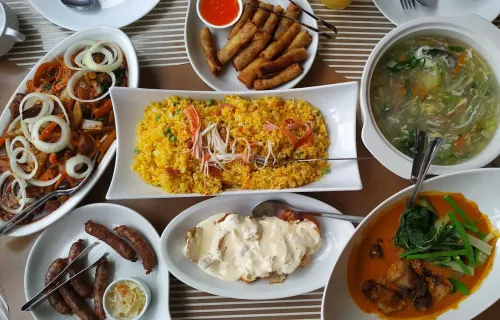
Filipino Food: 12 Essential Dishes (With Tagalog Names)
Filipino food, from adobo to halo-halo: learn the Tagalog names, pronunciations, and ingredients behind 12 dishes you'll want to try on your first trip.

Tagalog Slang Guide: 20 Words You'll Hear on TikTok
Tagalog slang explained: lodi, petmalu, werpa, astig, chika and more. Decode Filipino TikTok comments, group chats, and pop culture with this practical guide.

Ng vs Nang in Tagalog: The Spelling Rule
Ng vs nang sound identical but spell differently. Use ng to mark nouns (of, the object), and nang for how, when, repetition, and counting time.