maghango
maghangò with stress marks
to lift off the fire
From root: hango
Conjugations
Past (Completed)
naghango
nag-ha-NGO
lifted off
Present (Incomplete)
naghahango
nag-ha-ha-NGO
is lifting off
Future (Contemplated)
maghahango
mag-ha-ha-NGO
will lift off
Usage Note
Maghango is the actor-focus mag- infinitive of hango, used when the person removing food from the heat — or rescuing someone from hardship — is the subject. The root carries both a culinary sense and a figurative sense of deliverance common in religious and motivational speech; the object-focus partner is hanguin.
Examples
" Maghango ka na ng kanin. "
Natural Translation
Go lift the rice off the fire now.
Literal Translation
Lift off the fire you now of rice.
" Oras na para maghango ng nilulutong kanin. "
Natural Translation
It is time to lift the cooked rice off the fire.
Literal Translation
Time now for to lift off the fire of being-cooked rice.
" Bago pa lumamig ang ulam, nag-utos ang lola na maghango na ako ng nilagang baka mula sa kalan. "
Natural Translation
Before the dish could even cool, grandmother ordered me to lift the boiled beef off the stove.
Literal Translation
Before yet cooled the dish, ordered the grandmother that lift off I of boiled beef from stove.
Take Tagalog with you
The full course, a 12,500-word dictionary, and flashcards that make every word stick — free to start on iOS and Android.




Tagalog builds thousands of words from a few hundred roots.
How Tagalog words workWord family
hango has 1 related form built from the same root.
Related Words
Explore Tagalog by topic
Free guides on grammar, vocabulary, and culture to take you past single-word lookups.

Tagalog Time Expressions: Past, Present & Future Guide
Tagalog has no tenses — it uses aspect. Learn time words, days of the week, clock time, and the aspect system, with vocabulary tables and cultural notes.
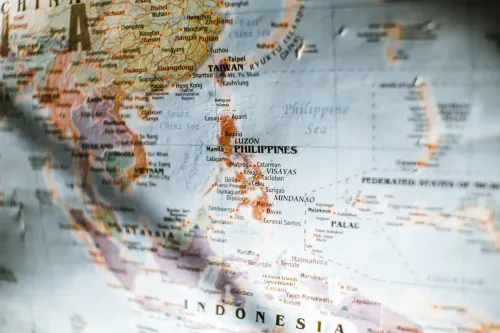
Philippines Geography for Learners: Islands & Language
Philippines geography for Tagalog learners: 7,641 islands, three island groups, and the Southern Luzon heartland where the Tagalog language was born.

How to Say Sorry in Tagalog: Patawad vs Pasensya
How to say sorry in Tagalog: patawad, pasensya na, and paumanhin compared on a simple severity-and-formality ladder so you pick the right word every time.

Tagalog Verb Focus System Explained (It's Not Active vs. Passive)
The Tagalog verb focus system isn't active vs. passive. Learn actor focus, object focus, and more with clear examples that finally make it click.