Also means
Hapon can also refer to a Japanese person or the act of staying all day in a certain state.
Usage Note
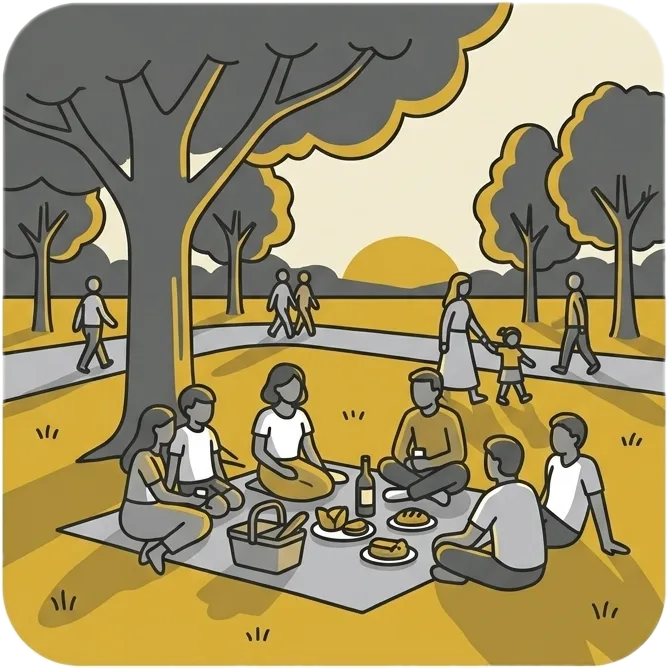
Hapon refers to the period from noon until sunset and is most frequently heard in the greeting 'Magandang hapon' (Good afternoon). It is the standard term used for any time during the latter half of the daylight hours.
Examples
" Magandang hapon po. "
Natural Translation
Good afternoon.
Literal Translation
Good afternoon (polite).
" Sa hapon ako nag-aaral. "
Natural Translation
I study in the afternoon.
Literal Translation
In the afternoon I study.
" Tuwing hapon pagkagaling sa eskwela, naglalaro muna ang mga bata sa labas bago mag-aral ng kanilang takdang-aralin. "
Natural Translation
Every afternoon after coming from school, the children play outside first before studying their homework.
Literal Translation
Every afternoon after-coming from school, play first the children outside before study of their homework.
Take Tagalog with you
The full course, a 12,500-word dictionary, and flashcards that make every word stick — free to start on iOS and Android.




Tagalog builds thousands of words from a few hundred roots.
How Tagalog words workDerived Words
Actor Focus Verbs
Object Focus Verbs
Related Words
Explore Tagalog by topic
Free guides on grammar, vocabulary, and culture to take you past single-word lookups.

Mano Po and Filipino Etiquette: A Visitor's Guide
Mano po presses an elder's hand to your forehead as a blessing. Learn who to mano, how to lip-point, and the etiquette that wins over a Filipino family.

Tagalog vs Filipino: What's the Difference & Which to Learn
Tagalog and Filipino aren't the same language — but they overlap almost completely. Here's the real difference and which one you should actually learn.

Tagalog Pronouns Explained: Complete Chart with Examples
Every Tagalog pronoun explained with clear charts: ang/ng/sa forms, tayo vs kami, ikaw vs ka, politeness markers, and the mistakes beginners make.
Po and Opo in Tagalog: Where to Put Them Right
Po and opo confuse learners — but placement follows one rule. Where po goes in a sentence, why it's opo not 'oo po', and the pronoun shift to learn.