
From root: harap
Conjugations
Past (Completed)
hinarap
hi-na-RAP
faced or confronted
Present (Incomplete)
hinaharap
hi-na-ha-RAP
facing or confronting
Future (Contemplated)
haharapin
ha-ha-ra-PIN
will face or confront
Usage Note
Harapin is used when one needs to confront a person, a challenge, or a reality that is often difficult or unavoidable. It implies taking responsibility or dealing with a situation head-on rather than avoiding it.
Examples
" Harapin mo ang takot mo. "
Natural Translation
Face your fear.
Literal Translation
Face you the fear your.
" Kailangan mong harapin ang problema. "
Natural Translation
You need to face the problem.
Literal Translation
Need you face the problem.
" Sa halip na umiwas, mas mabuting harapin natin ang katotohanan ngayon kaysa magsisi tayo sa huli. "
Natural Translation
Instead of avoiding it, it's better that we face the truth now rather than regret it in the end.
Literal Translation
In place of avoid, more good face we the truth now than regret we in end.
Take Tagalog with you
The full course, a 12,500-word dictionary, and flashcards that make every word stick — free to start on iOS and Android.




Tagalog builds thousands of words from a few hundred roots.
How Tagalog words workWord family
harap has 8 related forms built from the same root.
Related Words
Explore Tagalog by topic
Free guides on grammar, vocabulary, and culture to take you past single-word lookups.

Po and Opo in Tagalog: Where to Put Them Right
Po and opo confuse learners — but placement follows one rule. Where po goes in a sentence, why it's opo not 'oo po', and the pronoun shift to learn.
Days of the Week and Months in Tagalog
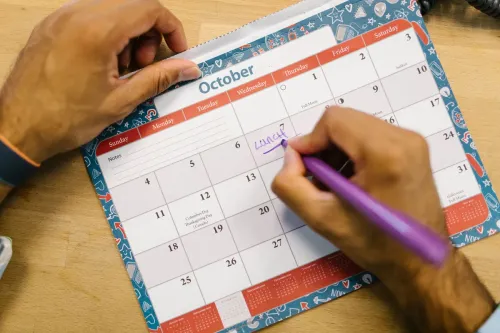
The days of the week and months in Tagalog are Spanish loanwords. Learn all 7 days and 12 months with pronunciation, plus how to say dates and 'every Monday.'

Languages of the Philippines: Tagalog, Cebuano, and More
Languages of the Philippines: one national language (Filipino) plus 180+ regional languages. Here's who speaks what, where, and why it matters to you.

Spaced Repetition for Tagalog: How Flashcards Make Words Stick
Cramming Tagalog vocabulary fails. See how spaced repetition — the science behind smart flashcards — makes words stick for the long term.