Usage Note
Heograpiya is borrowed from Spanish 'geografía' and is the standard Tagalog term for the academic discipline studying the physical features of the earth and the human activity that affects and is affected by them. It is a familiar term across all age groups as a standard subject in Philippine schools from elementary onward.
Examples
" Gusto ko ang heograpiya. "
Natural Translation
I like geography.
Literal Translation
Like I the geography.
" Nag-aaral kami ng heograpiya. "
Natural Translation
We are studying geography.
Literal Translation
Studying we of geography.
" Sa klase ng heograpiya, natutunan namin kung paano nakaaapekto ang mga bundok at ilog sa pamumuhay ng mga tao sa isang lugar. "
Natural Translation
In geography class, we learned how mountains and rivers affect the way people live in a place.
Literal Translation
In class of geography, learned we how affecting the mountains and rivers to living of the people in a place.
Take Tagalog with you
The full course, a 12,500-word dictionary, and flashcards that make every word stick — free to start on iOS and Android.




Tagalog builds thousands of words from a few hundred roots.
How Tagalog words workRelated Words
Explore Tagalog by topic
Free guides on grammar, vocabulary, and culture to take you past single-word lookups.
Tagalog Root Words: Learn a Few Hundred, Understand Thousands
Tagalog root words unlock vocabulary fast: learn a few hundred and recognize thousands. Real word families, examples, and a practical study strategy.

Ang, Ng, Sa: The 3 Tagalog Case Markers Explained
Ang, ng, sa are the three Tagalog case markers every noun takes. Learn what each does, the personal forms si/ni/kay, plurals with mga, and clear examples.
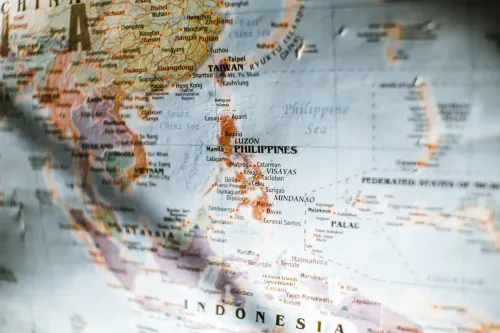
Philippines Geography for Learners: Islands & Language
Philippines geography for Tagalog learners: 7,641 islands, three island groups, and the Southern Luzon heartland where the Tagalog language was born.

Languages of the Philippines: Tagalog, Cebuano, and More
Languages of the Philippines: one national language (Filipino) plus 180+ regional languages. Here's who speaks what, where, and why it matters to you.