Italya
Itálya with stress marks
Italy
Usage Note
Italya is the Tagalog name for Italy, adapted from Spanish Italia. The country is known among Filipinos primarily for its cuisine, fashion, and the Vatican — given the Philippines' strong Catholic identity — and a significant number of Filipino overseas workers also reside there.
Examples
" Gusto kong pumunta sa Italya. "
Natural Translation
I want to go to Italy.
Literal Translation
Want I-to go to Italy.
" Nangangarap siyang makapunta sa Italya para makita ang Roma. "
Natural Translation
He/She dreams of going to Italy to see Rome.
Literal Translation
Dreams he/she to-be-able-to-go to Italy to see Rome.
" Maraming Pilipinong nagtatrabaho sa Italya ang nagtitiis ng lungkot makapagpadala lamang ng pera sa kanilang pamilya sa probinsya. "
Natural Translation
Many Filipinos working in Italy endure loneliness just to be able to send money to their families in the province.
Literal Translation
Many Filipino working in Italy the endure of sadness to-be-able-to-send only of money to their family in-the province.
Take Tagalog with you
The full course, a 12,500-word dictionary, and flashcards that make every word stick — free to start on iOS and Android.




Tagalog builds thousands of words from a few hundred roots.
How Tagalog words workRelated Words
Explore Tagalog by topic
Free guides on grammar, vocabulary, and culture to take you past single-word lookups.

Tagalog Numbers 1-100: Counting, Time & Money Explained
Learn Tagalog numbers 1-100 and beyond. Master both native and Spanish-derived counting systems, plus telling time, reading prices, and ordinals.
Days of the Week and Months in Tagalog
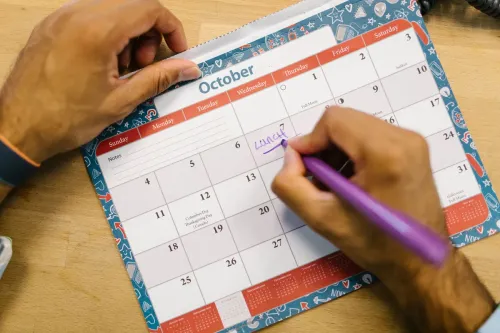
The days of the week and months in Tagalog are Spanish loanwords. Learn all 7 days and 12 months with pronunciation, plus how to say dates and 'every Monday.'
Philippine Christmas Traditions: World's Longest Holiday
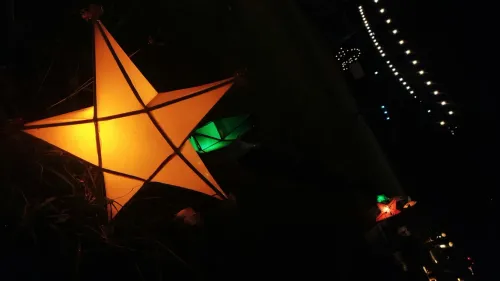
Philippine Christmas traditions run four months — from Ber-month carols to Simbang Gabi dawn masses, Noche Buena feasts, and parol lanterns lighting every street.

Tagalog Greetings: How to Say Hello, Goodbye & Po/Opo
Master Tagalog greetings with pronunciation: kumusta, magandang umaga, po and opo polite forms, time-of-day phrases, and the mano po tradition.