himas
himás with stress marks
gentle rubbing of skin
Usage Note
Himas describes a gentle, soothing stroking or rubbing of the skin, as done by a parent soothing a child or a healer treating a patient. It conveys tenderness and care, and appears often in the context of Filipino child-rearing practices and traditional healing.
Examples
" Gusto ng sanggol ang himas. "
Natural Translation
The baby likes the gentle rubbing.
Literal Translation
Like of baby the gentle-rub.
" Masarap ang himas ni Nanay. "
Natural Translation
Mom's gentle rubbing feels good.
Literal Translation
Good the gentle-rub of Mom.
" Sa bawat himas ng kanyang ina sa likod, unti-unting nawawala ang takot ng batang hindi makatulog. "
Natural Translation
With each gentle stroke of his mother on his back, the fear of the child who couldn't sleep slowly faded.
Literal Translation
In each gentle-rub of his mother on back, slowly disappearing the fear of child-that not can-sleep.
Take Tagalog with you
The full course, a 12,500-word dictionary, and flashcards that make every word stick — free to start on iOS and Android.




Tagalog builds thousands of words from a few hundred roots.
How Tagalog words workActor Focus Verbs
Object Focus Verbs
Related Words
Explore Tagalog by topic
Free guides on grammar, vocabulary, and culture to take you past single-word lookups.

Tagalog Time Expressions: Past, Present & Future Guide
Tagalog has no tenses — it uses aspect. Learn time words, days of the week, clock time, and the aspect system, with vocabulary tables and cultural notes.

How to Say "I Love You" in Tagalog: Phrases & Meaning
Learn how to say I love you in Tagalog. Mahal kita, Iniibig kita, and Filipino terms of endearment for partners, family, and friends — with cultural notes.

Languages of the Philippines: Tagalog, Cebuano, and More
Languages of the Philippines: one national language (Filipino) plus 180+ regional languages. Here's who speaks what, where, and why it matters to you.
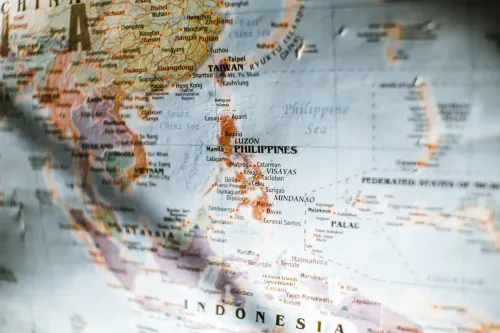
Philippines Geography for Learners: Islands & Language
Philippines geography for Tagalog learners: 7,641 islands, three island groups, and the Southern Luzon heartland where the Tagalog language was born.