From root: hina
Conjugations
Past (Completed)
nanghina
nang-hi-NA
felt weak
Present (Incomplete)
nanghihina
nang-hi-hi-NA
is feeling weak
Future (Contemplated)
manghihina
mang-hi-hi-NA
will feel weak
Usage Note
Manghina is used when describing a sudden or gradual loss of physical or emotional strength, often due to illness, fatigue, or shocking news. It implies a state of becoming weak or losing energy rather than just being weak by nature.
Examples
" Nanghihina ako ngayon. "
Natural Translation
I feel weak today.
Literal Translation
Feel-weak I today.
" Ayaw kong manghina ang katawan ko. "
Natural Translation
I don't want my body to feel weak.
Literal Translation
Not-want I feel-weak the body my.
" Nanghihina ako tuwing umaga dahil hindi ako nakakatulog nang maayos kapag maraming iniisip. "
Natural Translation
I feel weak every morning because I can't sleep properly when I have a lot on my mind.
Literal Translation
Feel-weak I every morning because not I can-sleep of proper when many being-thought.
Take Tagalog with you
The full course, a 12,500-word dictionary, and flashcards that make every word stick — free to start on iOS and Android.




Tagalog builds thousands of words from a few hundred roots.
How Tagalog words workWord family
hina has 7 related forms built from the same root.
Related Words
Explore Tagalog by topic
Free guides on grammar, vocabulary, and culture to take you past single-word lookups.

Tagalog Question Words: Ano, Sino, Saan & More
Tagalog question words like ano, sino, and saan need the right frame to work. Learn the ang-vs-pronoun rule, confusable pairs, and the ba particle with audio.

Tagalog Pronouns Explained: Complete Chart with Examples
Every Tagalog pronoun explained with clear charts: ang/ng/sa forms, tayo vs kami, ikaw vs ka, politeness markers, and the mistakes beginners make.
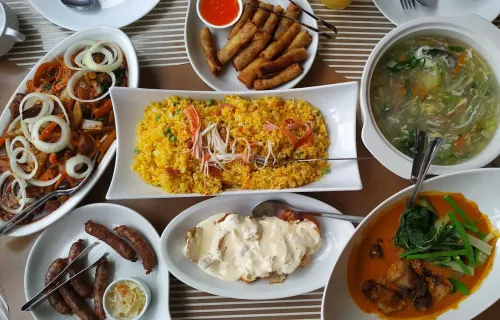
Filipino Food: 12 Essential Dishes (With Tagalog Names)
Filipino food, from adobo to halo-halo: learn the Tagalog names, pronunciations, and ingredients behind 12 dishes you'll want to try on your first trip.

Filipino Family Words and Honorifics: Ate, Kuya & Tita
Filipino family words like ate, kuya, tita, tito, lolo, and lola go far beyond family — learn how Filipinos use them with strangers, plus mano po etiquette.