From root: hinga
Conjugations
Past (Completed)
ipinahinga
i-pi-na-hi-NGA
rested something
Present (Incomplete)
ipinapahinga
i-pi-na-pa-hi-NGA
resting something
Future (Contemplated)
ipapahinga
i-pa-pa-hi-NGA
will rest something
Usage Note
Ipahinga is used when instructing someone to rest a specific body part or to take a break from an activity. It focuses on the object or part of the body being rested rather than the person.
Examples
" Ipahinga mo ang mga paa mo. "
Natural Translation
Rest your feet.
Literal Translation
Rest you the plural feet your.
" Kailangan mong ipahinga ang katawan mo. "
Natural Translation
You need to rest your body.
Literal Translation
Need you rest the body your.
" Pagkatapos ng mahabang lakad, ipahinga mo muna ang iyong mga binti bago magpatuloy sa paglalakbay. "
Natural Translation
After the long walk, rest your legs first before continuing the journey.
Literal Translation
After of long walk, rest you first the your plural legs before to-continue in journey.
Take Tagalog with you
The full course, a 12,500-word dictionary, and flashcards that make every word stick — free to start on iOS and Android.




Tagalog builds thousands of words from a few hundred roots.
How Tagalog words workWord family
hinga has 10 related forms built from the same root.
Related Words
Explore Tagalog by topic
Free guides on grammar, vocabulary, and culture to take you past single-word lookups.

Tagalog Pronouns Explained: Complete Chart with Examples
Every Tagalog pronoun explained with clear charts: ang/ng/sa forms, tayo vs kami, ikaw vs ka, politeness markers, and the mistakes beginners make.

Tagalog Verb Focus System Explained (It's Not Active vs. Passive)
The Tagalog verb focus system isn't active vs. passive. Learn actor focus, object focus, and more with clear examples that finally make it click.
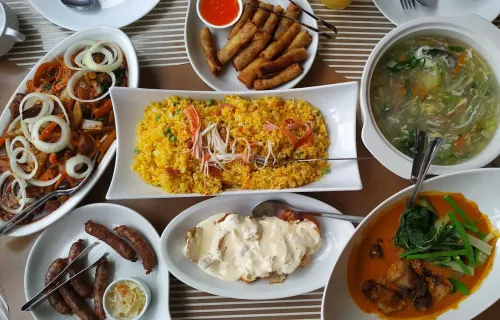
Filipino Food: 12 Essential Dishes (With Tagalog Names)
Filipino food, from adobo to halo-halo: learn the Tagalog names, pronunciations, and ingredients behind 12 dishes you'll want to try on your first trip.

Filipino Family Words and Honorifics: Ate, Kuya & Tita
Filipino family words like ate, kuya, tita, tito, lolo, and lola go far beyond family — learn how Filipinos use them with strangers, plus mano po etiquette.