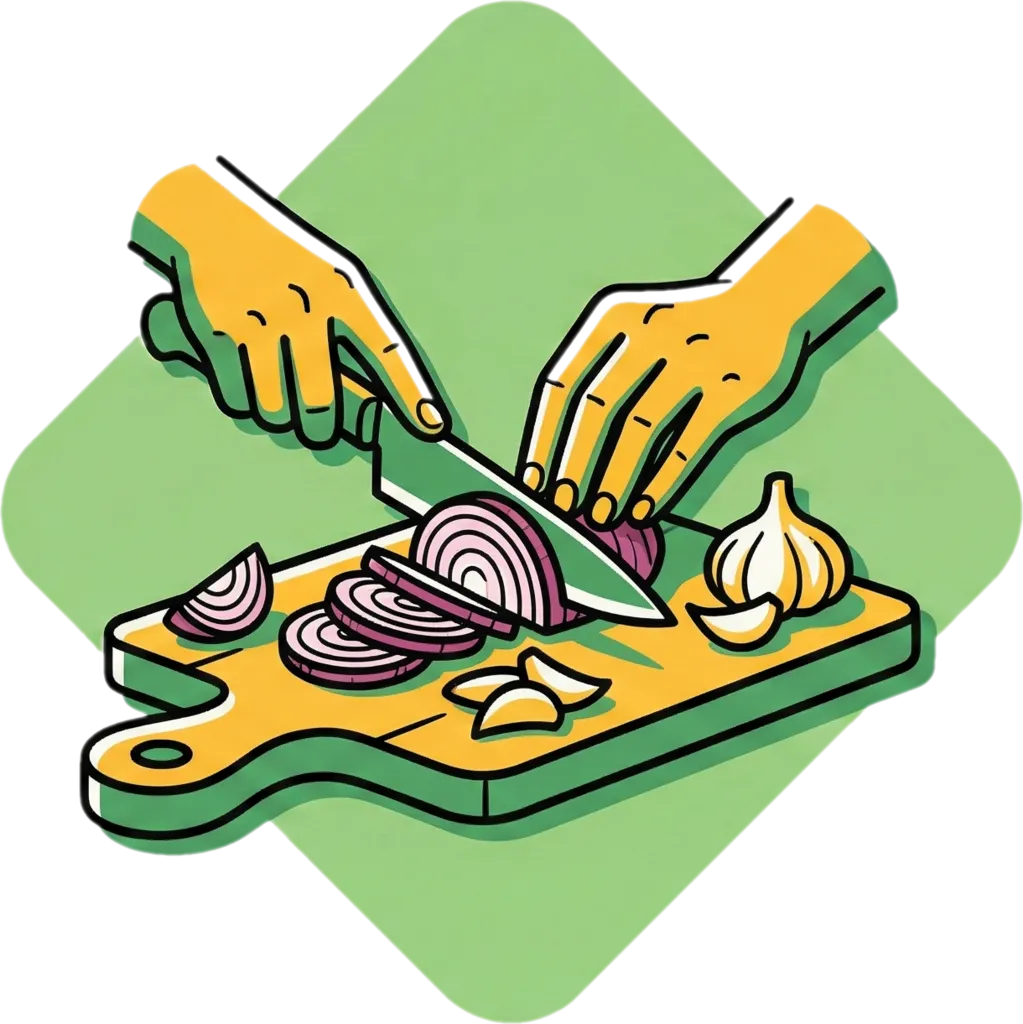
From root: hiwa
Conjugations
Past (Completed)
hiniwa
hi-NI-wa
sliced
Present (Incomplete)
hinihiwa
hi-ni-HI-wa
slicing
Future (Contemplated)
hihiwain
hi-hi-wa-IN
will slice
Usage Note
Hiwain is an object-focus verb used when specifically referring to the act of slicing something into pieces, most commonly in the context of food preparation like cutting bread, meat, or vegetables. It is frequently used in imperative form when giving instructions or following recipes.
Examples
" Hiwain mo ang mansanas. "
Natural Translation
Slice the apple.
Literal Translation
Slice you the apple.
" Kailangan mong hiwain ang tinapay ngayon. "
Natural Translation
You need to slice the bread now.
Literal Translation
Need you slice the bread now.
" Bago mo iluto ang karne, hiwain mo muna ito nang pantay-pantay para magkasabay maluto. "
Natural Translation
Before you cook the meat, slice it evenly first so the pieces cook at the same time.
Literal Translation
Before you cook the meat, slice you first this evenly so together get-cooked.
Take Tagalog with you
The full course, a 12,500-word dictionary, and flashcards that make every word stick — free to start on iOS and Android.




Tagalog builds thousands of words from a few hundred roots.
How Tagalog words workWord family
hiwa has 8 related forms built from the same root.
Related Words
Explore Tagalog by topic
Free guides on grammar, vocabulary, and culture to take you past single-word lookups.

Tagalog Slang Guide: 20 Words You'll Hear on TikTok
Tagalog slang explained: lodi, petmalu, werpa, astig, chika and more. Decode Filipino TikTok comments, group chats, and pop culture with this practical guide.

Tagalog Verb Focus System Explained (It's Not Active vs. Passive)
The Tagalog verb focus system isn't active vs. passive. Learn actor focus, object focus, and more with clear examples that finally make it click.

Magkano: How to Ask "How Much" in Tagalog
Magkano means how much in Tagalog. Learn to ask a price, tell it apart from ilan and gaano, sound polite with po, and haggle at the palengke.

Ang, Ng, Sa: The 3 Tagalog Case Markers Explained
Ang, ng, sa are the three Tagalog case markers every noun takes. Learn what each does, the personal forms si/ni/kay, plurals with mga, and clear examples.