hugpong
hugpóng with stress marks
joining place/thing
Usage Note
Hugpong refers to a joint, connection, or junction — the point or thing that links two parts together. It is used in both physical and organizational contexts, such as a joint in carpentry or a connecting body in governance. The word appears in formal and technical language more than in everyday casual speech.
Examples
" Sira ang hugpong ng tubo. "
Natural Translation
The joint of the pipe is broken.
Literal Translation
Broken the joint of-the pipe.
" Masigla ang hugpong ng dalawang ilog dito. "
Natural Translation
The confluence of the two rivers here is lively.
Literal Translation
Lively the joining-place of-the two rivers here.
" Tumagas ang tubig dahil maluwag ang hugpong ng dalawang tubong dinikit ng manggagawa. "
Natural Translation
The water leaked because the joint of the two pipes that the worker attached was loose.
Literal Translation
Leaked the water because loose the joint of-the two pipe attached by-the worker.
Take Tagalog with you
The full course, a 12,500-word dictionary, and flashcards that make every word stick — free to start on iOS and Android.




Tagalog builds thousands of words from a few hundred roots.
How Tagalog words workRelated Words
Explore Tagalog by topic
Free guides on grammar, vocabulary, and culture to take you past single-word lookups.

Tagalog Time Expressions: Past, Present & Future Guide
Tagalog has no tenses — it uses aspect. Learn time words, days of the week, clock time, and the aspect system, with vocabulary tables and cultural notes.

Seasons in the Philippines: A Tagalog Guide
The Philippines has two seasons, not four. Learn tag-araw, tag-ulan, and taglamig, the generative tag- prefix, and the weather vocabulary to match.

Tagalog Verb Conjugation: Aspects Made Simple
Tagalog verb conjugation uses aspects, not tenses. Learn the three aspects with -um- and mag- verbs, one reduplication rule, and clear example tables.
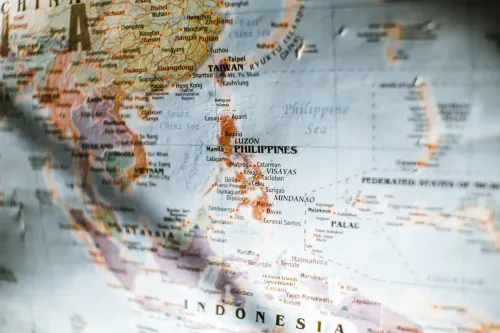
Philippines Geography for Learners: Islands & Language
Philippines geography for Tagalog learners: 7,641 islands, three island groups, and the Southern Luzon heartland where the Tagalog language was born.