istorbo
istórbo with stress marks
disturb; bother
Usage Note
Istorbo is a loanword from Spanish estorbo, functioning as both a noun for a nuisance or disturbance and a verb root for the act of bothering someone. It is deeply embedded in everyday speech. The self-deprecating use — expressing reluctance to be an istorbo — reflects the Filipino value of pakikisama and the cultural discomfort with imposing on others.
Examples
" Ayaw kong maging istorbo. "
Natural Translation
I don't want to be a bother.
Literal Translation
Dislike I become disturbance.
" Huwag kang istorbo sa trabaho. "
Natural Translation
Don't be a disturbance to the work.
Literal Translation
Do-not you disturb in-the work.
" Pasensya na kung istorbo ako, pero kailangan ko lang itanong kung saan ang pinakamalapit na ospital. "
Natural Translation
Sorry if I'm a bother, but I just need to ask where the nearest hospital is.
Literal Translation
Sorry if disturbance I, but need I just ask where the nearest linker hospital.
Take Tagalog with you
The full course, a 12,500-word dictionary, and flashcards that make every word stick — free to start on iOS and Android.




Tagalog builds thousands of words from a few hundred roots.
How Tagalog words workActor Focus Verbs
Object Focus Verbs
Related Words
Explore Tagalog by topic
Free guides on grammar, vocabulary, and culture to take you past single-word lookups.

Tagalog Verb Conjugation: Aspects Made Simple
Tagalog verb conjugation uses aspects, not tenses. Learn the three aspects with -um- and mag- verbs, one reduplication rule, and clear example tables.

May vs Mayroon vs Meron: Have & There Is
May vs mayroon in Tagalog finally made simple: one rule decides which to use, plus how meron and wala fit the same have and there-is family.

Tagalog Verb Focus System Explained (It's Not Active vs. Passive)
The Tagalog verb focus system isn't active vs. passive. Learn actor focus, object focus, and more with clear examples that finally make it click.
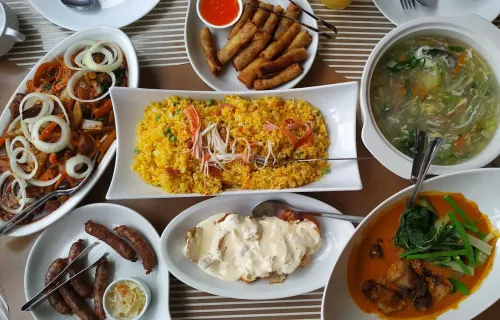
Filipino Food: 12 Essential Dishes (With Tagalog Names)
Filipino food, from adobo to halo-halo: learn the Tagalog names, pronunciations, and ingredients behind 12 dishes you'll want to try on your first trip.