kaing
káing with stress marks
big basket
Usage Note
Kaing refers to a large woven basket typically made from bamboo or rattan, used in Philippine agricultural settings to carry and store harvested crops such as vegetables, fish, or rice. It is a common sight in local markets and farms and represents traditional Filipino craft and rural livelihood. The size distinguishes it from the smaller 'bayong' or 'basket.'
Examples
" Bumili ako ng isang kaing na mangga. "
Natural Translation
I bought a big basket of mangoes.
Literal Translation
Bought I one big-basket of mango.
" Puno ang kaing ng prutas na mula sa bukid. "
Natural Translation
The big basket is full of fruit from the farm.
Literal Translation
Full the big-basket of fruit from the farm.
" Bawat umaga, dala-dala ng mga mangingisda ang kanilang kaing na puno ng sariwang isda papunta sa palengke. "
Natural Translation
Every morning, the fishermen carry their big baskets full of fresh fish to the market.
Literal Translation
Every morning, carry of-the fishermen the their big-basket that full of fresh fish going to-the market.
Take Tagalog with you
The full course, a 12,500-word dictionary, and flashcards that make every word stick — free to start on iOS and Android.




Tagalog builds thousands of words from a few hundred roots.
How Tagalog words workRelated Words
Explore Tagalog by topic
Free guides on grammar, vocabulary, and culture to take you past single-word lookups.
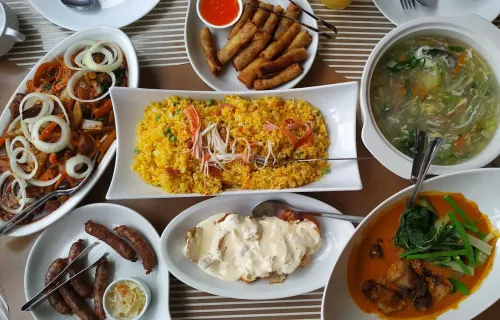
Filipino Food: 12 Essential Dishes (With Tagalog Names)
Filipino food, from adobo to halo-halo: learn the Tagalog names, pronunciations, and ingredients behind 12 dishes you'll want to try on your first trip.

Tagalog Verb Conjugation: Aspects Made Simple
Tagalog verb conjugation uses aspects, not tenses. Learn the three aspects with -um- and mag- verbs, one reduplication rule, and clear example tables.

Tagalog Pronouns Explained: Complete Chart with Examples
Every Tagalog pronoun explained with clear charts: ang/ng/sa forms, tayo vs kami, ikaw vs ka, politeness markers, and the mistakes beginners make.
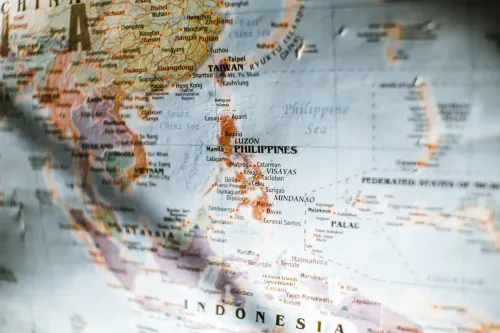
Philippines Geography for Learners: Islands & Language
Philippines geography for Tagalog learners: 7,641 islands, three island groups, and the Southern Luzon heartland where the Tagalog language was born.