kalingkingan
kalingkingán with stress marks
little finger
Usage Note
Kalingkingan is the standard Tagalog term for the pinky finger, derived from the root lingking referring to something small and dangling. It is featured in children's finger-counting songs and rhymes, and is also used figuratively — kahit kalingkingan lang — to express something minimal or just a small amount.
Examples
" Masakit ang kalingkingan ko. "
Natural Translation
My pinky finger hurts.
Literal Translation
Painful the little-finger my.
" Nasugatang bahagya ang kalingkingan niya nang madulas ang kutsilyo. "
Natural Translation
His/Her little finger got slightly cut when the knife slipped.
Literal Translation
Got-cut slightly the little-finger his/her when slipped the knife.
" Handa akong tumulong kahit kalingkingan lang ang maiaambag ko sa proyektong pangkomunidad ninyo. "
Natural Translation
I'm willing to help even if all I can contribute is just a tiny bit to your community project.
Literal Translation
Ready I-that help even little-finger only the can-contribute I in project community your.
Take Tagalog with you
The full course, a 12,500-word dictionary, and flashcards that make every word stick — free to start on iOS and Android.




Tagalog builds thousands of words from a few hundred roots.
How Tagalog words workRelated Words
Explore Tagalog by topic
Free guides on grammar, vocabulary, and culture to take you past single-word lookups.

Tagalog Pronouns Explained: Complete Chart with Examples
Every Tagalog pronoun explained with clear charts: ang/ng/sa forms, tayo vs kami, ikaw vs ka, politeness markers, and the mistakes beginners make.

Tagalog vs Filipino: What's the Difference & Which to Learn
Tagalog and Filipino aren't the same language — but they overlap almost completely. Here's the real difference and which one you should actually learn.
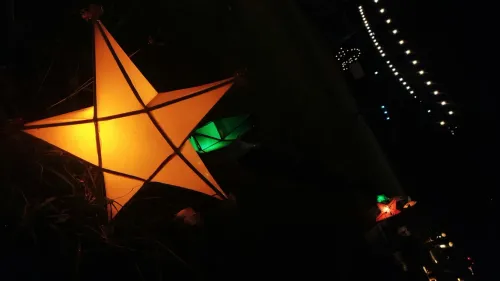
Philippine Christmas Traditions: World's Longest Holiday
Philippine Christmas traditions run four months — from Ber-month carols to Simbang Gabi dawn masses, Noche Buena feasts, and parol lanterns lighting every street.
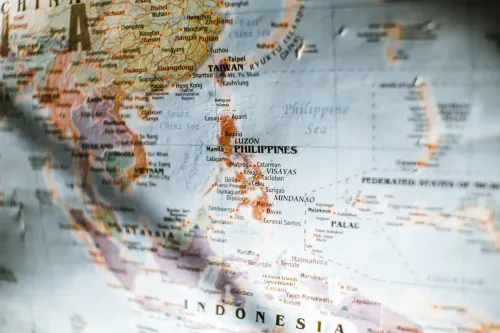
Philippines Geography for Learners: Islands & Language
Philippines geography for Tagalog learners: 7,641 islands, three island groups, and the Southern Luzon heartland where the Tagalog language was born.