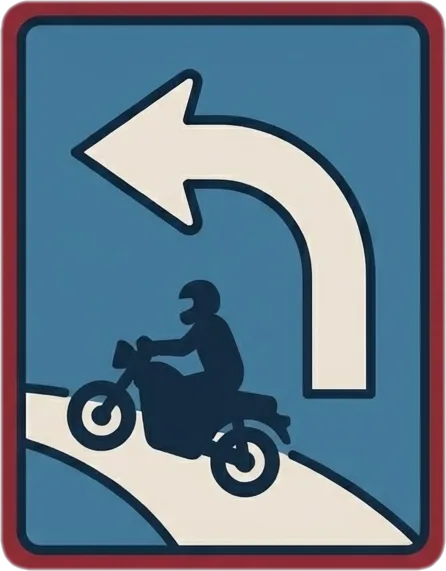
From root: kaliwa
Conjugations
Past (Completed)
kinaliwa
ki-na-li-WA
turned left at a place
Present (Incomplete)
kinakaliwa
ki-na-ka-li-WA
turning left at a place
Future (Contemplated)
kakaliwain
ka-ka-li-wa-IN
will turn left at a place
Usage Note
Kaliwain is used when giving directions to indicate turning left at a specific landmark or intersection. It focuses on the location where the turn is made rather than the person performing the action.
Examples
" Kaliwain mo ang kanto. "
Natural Translation
Turn left at the corner.
Literal Translation
Turn-left-at you the corner.
" Kailangan mong kaliwain ang kalsadang iyon. "
Natural Translation
You need to turn left at that road.
Literal Translation
Need by-you turn-left-at road that.
" Kaliwain mo ang kalyeng may malaking puno at nandoon na ang aming bahay sa dulo. "
Natural Translation
Turn left at the street with the big tree, and our house is right there at the end.
Literal Translation
Turn-left-at you the street with big tree and there already the our house at end.
Take Tagalog with you
The full course, a 12,500-word dictionary, and flashcards that make every word stick — free to start on iOS and Android.




Tagalog builds thousands of words from a few hundred roots.
How Tagalog words workWord family
kaliwa has 7 related forms built from the same root.
Related Words
Explore Tagalog by topic
Free guides on grammar, vocabulary, and culture to take you past single-word lookups.

Languages of the Philippines: Tagalog, Cebuano, and More
Languages of the Philippines: one national language (Filipino) plus 180+ regional languages. Here's who speaks what, where, and why it matters to you.
Filipino Family Words and Honorifics: Ate, Kuya & Tita
Filipino family words like ate, kuya, tita, tito, lolo, and lola go far beyond family — learn how Filipinos use them with strangers, plus mano po etiquette.

Magkano: How to Ask "How Much" in Tagalog
Magkano means how much in Tagalog. Learn to ask a price, tell it apart from ilan and gaano, sound polite with po, and haggle at the palengke.

Mano Po and Filipino Etiquette: A Visitor's Guide
Mano po presses an elder's hand to your forehead as a blessing. Learn who to mano, how to lip-point, and the etiquette that wins over a Filipino family.