
From root: kamay
Conjugations
Past (Completed)
kumamay
ku-ma-MAY
shook hands
Present (Incomplete)
kumakamay
ku-ma-ka-MAY
shaking hands
Future (Contemplated)
kakamay
ka-ka-MAY
will shake hands
Usage Note
Kumamay is used to describe the act of shaking hands, typically in formal settings, introductions, or when concluding an agreement. While it denotes respect, the more common form used in daily conversation to express the social interaction of shaking hands is 'makipagkamay'.
Examples
" Kumamay ka sa kanya. "
Natural Translation
Shake hands with him.
Literal Translation
Shake-hands you to him.
" Kailangan nating kumamay sa ating mga bisita. "
Natural Translation
We need to shake hands with our guests.
Literal Translation
Need we shake hands to our guests.
" Matapos pirmahan ang kasunduan, kumamay ang dalawang negosyante bilang tanda ng tiwala sa isa't isa. "
Natural Translation
After signing the agreement, the two businessmen shook hands as a sign of trust in each other.
Literal Translation
After to-sign the agreement, shook-hands the two businessman as sign of trust in each other.
Take Tagalog with you
The full course, a 12,500-word dictionary, and flashcards that make every word stick — free to start on iOS and Android.




Tagalog builds thousands of words from a few hundred roots.
How Tagalog words workWord family
kamay has 6 related forms built from the same root.
Related Words
Explore Tagalog by topic
Free guides on grammar, vocabulary, and culture to take you past single-word lookups.
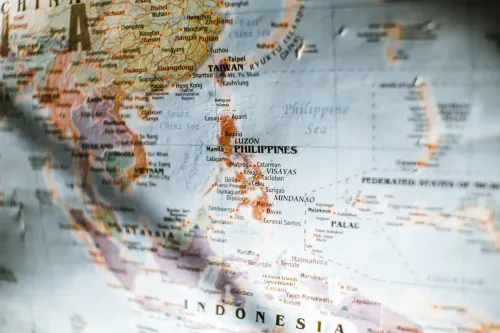
Philippines Geography for Learners: Islands & Language
Philippines geography for Tagalog learners: 7,641 islands, three island groups, and the Southern Luzon heartland where the Tagalog language was born.

Tagalog Affixes Explained: A Beginner's Guide to Word Building
Tagalog affixes turn one root word into dozens of meanings. Learn prefixes, infixes, suffixes, and circumfixes with clear examples for beginners.

Tagalog Numbers 1-100: Counting, Time & Money Explained
Learn Tagalog numbers 1-100 and beyond. Master both native and Spanish-derived counting systems, plus telling time, reading prices, and ordinals.

Tagalog Pronouns Explained: Complete Chart with Examples
Every Tagalog pronoun explained with clear charts: ang/ng/sa forms, tayo vs kami, ikaw vs ka, politeness markers, and the mistakes beginners make.