From root: kamot
Usage Note
Pangamot refers to a tool like a backscratcher used to relieve an itch in hard-to-reach places. It is a handy household item in many Filipino homes.
Examples
" Nasaan ang pangamot ko? "
Natural Translation
Where is my back-scratcher?
Literal Translation
Where the scratcher my?
" Nasaan ang aking pangamot sa likod? "
Natural Translation
Where is my back-scratcher?
Literal Translation
Where is my back-scratcher?
" Mula nang mawala ang kahoy na pangamot, kailangan na niyang humingi ng tulong tuwing makati ang likod niya. "
Natural Translation
Ever since the wooden back-scratcher got lost, he has had to ask for help whenever his back itches.
Literal Translation
Since when lost the wooden scratcher, need now he ask of help every itchy the back his.
Take Tagalog with you
The full course, a 12,500-word dictionary, and flashcards that make every word stick — free to start on iOS and Android.




Tagalog builds thousands of words from a few hundred roots.
How Tagalog words workWord family
kamot has 6 related forms built from the same root.
Related Words
Explore Tagalog by topic
Free guides on grammar, vocabulary, and culture to take you past single-word lookups.

How to Say Sorry in Tagalog: Patawad vs Pasensya
How to say sorry in Tagalog: patawad, pasensya na, and paumanhin compared on a simple severity-and-formality ladder so you pick the right word every time.

Tagalog Verb Focus System Explained (It's Not Active vs. Passive)
The Tagalog verb focus system isn't active vs. passive. Learn actor focus, object focus, and more with clear examples that finally make it click.

Is Tagalog Hard to Learn? An Honest Answer
Tagalog takes around 1,100 hours to reach professional proficiency. Here is what is easy, what is hard, and what to expect at 3, 6, and 12 months.
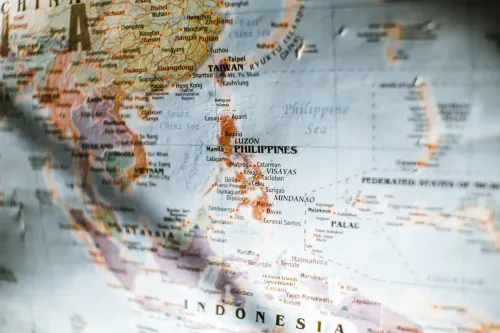
Philippines Geography for Learners: Islands & Language
Philippines geography for Tagalog learners: 7,641 islands, three island groups, and the Southern Luzon heartland where the Tagalog language was born.