kamot
kamót with stress marks
scratch (an itch); stretch marks
Usage Note
Kamot refers to scratching an itch or the common gesture of scratching one's head (kamot-ulo) to show confusion, embarrassment, or frustration. It is most frequently used in the verb form 'magkamot' to describe someone feeling awkward or puzzled.
Examples
" Huwag mong kamutin ang sugat. "
Natural Translation
Don't scratch the wound.
Literal Translation
Don't you scratch the wound.
" Kamot siya nang kamot sa braso. "
Natural Translation
He keeps scratching his arm.
Literal Translation
Scratch he/she and scratch on arm.
" Nang hindi niya masagot ang tanong, napakamot na lang siya sa ulo dahil sa labis na pagkalito. "
Natural Translation
When he could not answer the question, he just scratched his head out of sheer confusion.
Literal Translation
When not by-him answered the question, scratched just he on head because of excessive confusion.
Take Tagalog with you
The full course, a 12,500-word dictionary, and flashcards that make every word stick — free to start on iOS and Android.




Tagalog builds thousands of words from a few hundred roots.
How Tagalog words workDerived Words
Actor Focus Verbs
Object Focus Verbs
Related Words
Explore Tagalog by topic
Free guides on grammar, vocabulary, and culture to take you past single-word lookups.

Tagalog Numbers 1-100: Counting, Time & Money Explained
Learn Tagalog numbers 1-100 and beyond. Master both native and Spanish-derived counting systems, plus telling time, reading prices, and ordinals.

Filipino Food: 12 Essential Dishes (With Tagalog Names)
Filipino food, from adobo to halo-halo: learn the Tagalog names, pronunciations, and ingredients behind 12 dishes you'll want to try on your first trip.

Filipino Family Words and Honorifics: Ate, Kuya & Tita
Filipino family words like ate, kuya, tita, tito, lolo, and lola go far beyond family — learn how Filipinos use them with strangers, plus mano po etiquette.
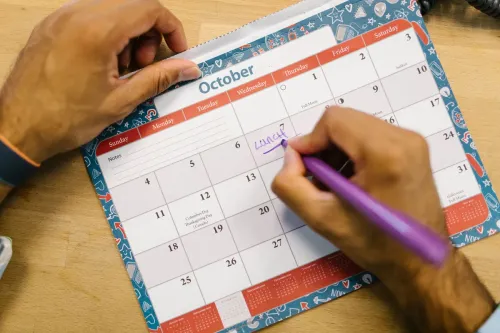
Days of the Week and Months in Tagalog
The days of the week and months in Tagalog are Spanish loanwords. Learn all 7 days and 12 months with pronunciation, plus how to say dates and 'every Monday.'