Usage Note
Karwahe is a Spanish loanword for a horse-drawn carriage or coach, now used mainly in historical or literary contexts. Horse-drawn vehicles called kalesa still operate in some Philippine heritage areas, keeping the word in occasional everyday use.
Examples
" Sumakay kami sa karwahe. "
Natural Translation
We rode the carriage.
Literal Translation
Rode we in-the carriage.
" Sumakay sila sa karwahe para makarating sa simbahan. "
Natural Translation
They rode the carriage to get to the church.
Literal Translation
Rode they in-the carriage to reach the church.
" Noong unang panahon, ang mga mayayamang pamilya ay naglalakbay sa karwaheng hinihila ng dalawang malalaking kabayo. "
Natural Translation
In the old days, wealthy families traveled in a carriage pulled by two large horses.
Literal Translation
In old time, the wealthy families traveled in carriage being-pulled by two large horses.
Take Tagalog with you
The full course, a 12,500-word dictionary, and flashcards that make every word stick — free to start on iOS and Android.




Tagalog builds thousands of words from a few hundred roots.
How Tagalog words workRelated Words
Explore Tagalog by topic
Free guides on grammar, vocabulary, and culture to take you past single-word lookups.
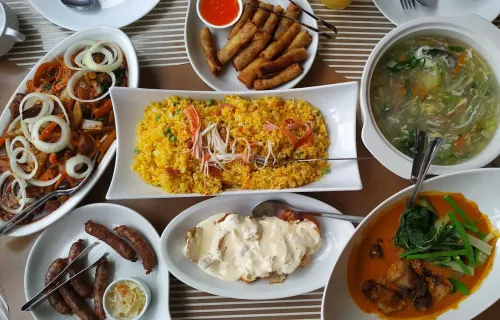
Filipino Food: 12 Essential Dishes (With Tagalog Names)
Filipino food, from adobo to halo-halo: learn the Tagalog names, pronunciations, and ingredients behind 12 dishes you'll want to try on your first trip.

Magkano: How to Ask "How Much" in Tagalog
Magkano means how much in Tagalog. Learn to ask a price, tell it apart from ilan and gaano, sound polite with po, and haggle at the palengke.

Ng vs Nang in Tagalog: The Spelling Rule
Ng vs nang sound identical but spell differently. Use ng to mark nouns (of, the object), and nang for how, when, repetition, and counting time.
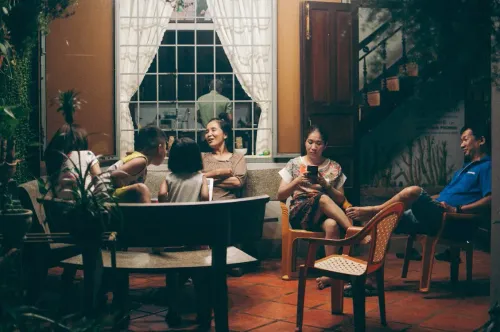
Filipino Family Words and Honorifics: Ate, Kuya & Tita
Filipino family words like ate, kuya, tita, tito, lolo, and lola go far beyond family — learn how Filipinos use them with strangers, plus mano po etiquette.