magkasa
magkasá with stress marks
to cock
From root: kasá
Conjugations
Past (Completed)
nagkasa
nag-ka-SA
cocked
Present (Incomplete)
nagkakasa
nag-ka-ka-SA
is cocking
Future (Contemplated)
magkakasa
mag-ka-ka-SA
will cock
Usage Note
Magkasa is the actor-focus mag- form of kasá, used for cocking a weapon or readying a mechanism for action. Figuratively it extends to preparing oneself for a demanding task, giving the word a sense of deliberate, focused readiness beyond the purely physical.
Examples
" Huwag kang magkasa ng baril. "
Natural Translation
Do not cock the gun.
Literal Translation
Don't you to-cock of gun.
" Mapanganib magkasa ng baril nang walang dahilan. "
Natural Translation
It is dangerous to cock a gun without a reason.
Literal Translation
Dangerous to cock of gun without reason.
" Bago siya magkasa ng kanyang baril, siniguro muna niyang walang tao sa paligid na maaaring masaktan. "
Natural Translation
Before he cocked his gun, he first made sure there was no one nearby who might get hurt.
Literal Translation
Before he to-cock of his gun, made-sure first he no person around that might be-hurt.
Take Tagalog with you
The full course, a 12,500-word dictionary, and flashcards that make every word stick — free to start on iOS and Android.




Tagalog builds thousands of words from a few hundred roots.
How Tagalog words workWord family
kasá has 1 related form built from the same root.
Related Words
Explore Tagalog by topic
Free guides on grammar, vocabulary, and culture to take you past single-word lookups.
May vs Mayroon vs Meron: Have & There Is
May vs mayroon in Tagalog finally made simple: one rule decides which to use, plus how meron and wala fit the same have and there-is family.

Tagalog Verb Focus System Explained (It's Not Active vs. Passive)
The Tagalog verb focus system isn't active vs. passive. Learn actor focus, object focus, and more with clear examples that finally make it click.

Spaced Repetition for Tagalog: How Flashcards Make Words Stick
Cramming Tagalog vocabulary fails. See how spaced repetition — the science behind smart flashcards — makes words stick for the long term.
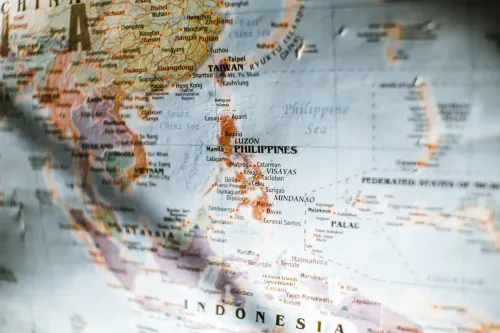
Philippines Geography for Learners: Islands & Language
Philippines geography for Tagalog learners: 7,641 islands, three island groups, and the Southern Luzon heartland where the Tagalog language was born.