Usage Note
Koliseo, borrowed from Spanish coliseo, traditionally refers in the Philippines to a cockfighting arena — a legal and culturally significant pastime — though it can also denote large entertainment venues or sports arenas. Learners should be aware that the cockfighting sense is the first meaning many Filipinos will reach for.
Examples
" Malaki ang koliseo sa amin. "
Natural Translation
The arena in our town is big.
Literal Translation
Big the arena in us.
" Puno ang koliseo tuwing may sabong. "
Natural Translation
The coliseum is always full during cockfights.
Literal Translation
Full the coliseum every-time there-is cockfight.
" Tuwing pista, dinarayo ng mga manunugal ang koliseo dahil doon ginaganap ang pinakamalaking sabong sa lalawigan. "
Natural Translation
During the fiesta, gamblers flock to the arena because the biggest cockfight in the province is held there.
Literal Translation
Every fiesta, flocked-to by-the gamblers the arena because there held the biggest cockfight in-the province.
Take Tagalog with you
The full course, a 12,500-word dictionary, and flashcards that make every word stick — free to start on iOS and Android.




Tagalog builds thousands of words from a few hundred roots.
How Tagalog words workRelated Words
Explore Tagalog by topic
Free guides on grammar, vocabulary, and culture to take you past single-word lookups.
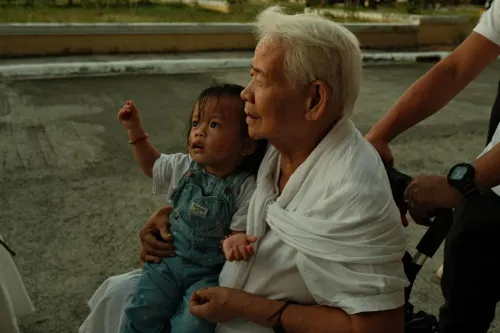
Po and Opo in Tagalog: Where to Put Them Right
Po and opo confuse learners — but placement follows one rule. Where po goes in a sentence, why it's opo not 'oo po', and the pronoun shift to learn.

Tagalog Pronouns Explained: Complete Chart with Examples
Every Tagalog pronoun explained with clear charts: ang/ng/sa forms, tayo vs kami, ikaw vs ka, politeness markers, and the mistakes beginners make.

Na vs -ng in Tagalog: The Linker Rule Made Simple
When do you use na vs -ng in Tagalog? One simple rule, with clear examples, memory tips, and common mistakes explained for English-speaking beginners.
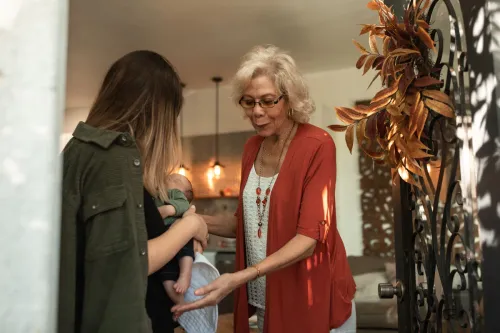
Mano Po and Filipino Etiquette: A Visitor's Guide
Mano po presses an elder's hand to your forehead as a blessing. Learn who to mano, how to lip-point, and the etiquette that wins over a Filipino family.