konsumerismo
konsumerísmo with stress marks
consumerism
Usage Note
Konsumerismo is used mainly in academic, journalistic, and social commentary contexts to critique the culture of excessive buying. It is a topic increasingly discussed in the Philippines as mall culture and online shopping have expanded dramatically.
Examples
" Laganap ang konsumerismo ngayon. "
Natural Translation
Consumerism is widespread now.
Literal Translation
Widespread the consumerism now.
" Tinatalakay ng propesor ang epekto ng konsumerismo sa kalikasan. "
Natural Translation
The professor is discussing the effects of consumerism on nature.
Literal Translation
Being-discussed-by the professor the effect of-the consumerism on-the nature.
" Ang walang-habas na konsumerismo ang dahilan kung bakit maraming tao ang lumulubog sa utang dahil sa pamimili. "
Natural Translation
Unrestrained consumerism is the reason why many people sink into debt because of shopping.
Literal Translation
The without-restraint the consumerism the reason why many person the sinking in debt because of shopping.
Take Tagalog with you
The full course, a 12,500-word dictionary, and flashcards that make every word stick — free to start on iOS and Android.




Tagalog builds thousands of words from a few hundred roots.
How Tagalog words workRelated Words
- AWOL absence without leave
- Amboy short for American boy
- Ati ethnolinguistic group in Panay
- Balbalan ethnolinguistic group (Kalinga)
- Hiligaynon ethnolinguistic group/language
- Ilokana female native of the Ilocos region; Ilokana woman
- Ilokano Ethnolinguistic group in Ilocos
- Ilonggo Language/People of Western Visayas
Explore Tagalog by topic
Free guides on grammar, vocabulary, and culture to take you past single-word lookups.

Ang, Ng, Sa: The 3 Tagalog Case Markers Explained
Ang, ng, sa are the three Tagalog case markers every noun takes. Learn what each does, the personal forms si/ni/kay, plurals with mga, and clear examples.

Po and Opo in Tagalog: Where to Put Them Right
Po and opo confuse learners — but placement follows one rule. Where po goes in a sentence, why it's opo not 'oo po', and the pronoun shift to learn.

Is Tagalog Hard to Learn? An Honest Answer
Tagalog takes around 1,100 hours to reach professional proficiency. Here is what is easy, what is hard, and what to expect at 3, 6, and 12 months.
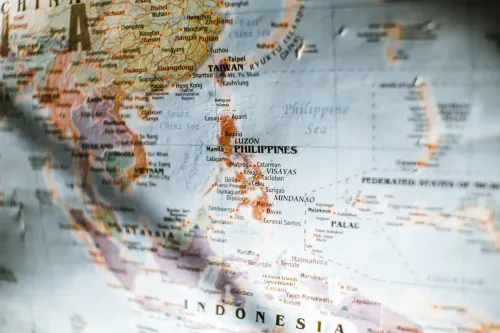
Philippines Geography for Learners: Islands & Language
Philippines geography for Tagalog learners: 7,641 islands, three island groups, and the Southern Luzon heartland where the Tagalog language was born.