From root: laya
Conjugations
Past (Completed)
ipinalaya
i-pi-na-la-YA
had someone freed
Present (Incomplete)
ipinapalaya
i-pi-na-pa-la-YA
having someone freed
Future (Contemplated)
ipapalaya
i-pa-pa-la-YA
will have someone freed
Usage Note
Ipalaya is used when requesting or ordering someone's release, typically in legal, formal, or high-stakes contexts. It functions as an object-focus verb where the person being set free is the main focus of the sentence.
Examples
" Ipalaya mo na siya. "
Natural Translation
Have him freed now.
Literal Translation
Have-freed by-you now him.
" Kailangan mong ipalaya siya ngayon. "
Natural Translation
You need to have him freed now.
Literal Translation
Need you have-freed him now.
" Iniutos ng hukom na ipalaya kaagad ang akusado matapos mapatunayang wala siyang kinalaman sa krimen. "
Natural Translation
The judge ordered that the accused be freed immediately after it was proven that he had nothing to do with the crime.
Literal Translation
Ordered by judge that have-freed immediately the accused after proven no he involvement in crime.
Take Tagalog with you
The full course, a 12,500-word dictionary, and flashcards that make every word stick — free to start on iOS and Android.




Tagalog builds thousands of words from a few hundred roots.
How Tagalog words workWord family
laya has 8 related forms built from the same root.
Related Words
Explore Tagalog by topic
Free guides on grammar, vocabulary, and culture to take you past single-word lookups.
Po and Opo in Tagalog: Where to Put Them Right
Po and opo confuse learners — but placement follows one rule. Where po goes in a sentence, why it's opo not 'oo po', and the pronoun shift to learn.
Tagalog Numbers 1-100: Counting, Time & Money Explained
Learn Tagalog numbers 1-100 and beyond. Master both native and Spanish-derived counting systems, plus telling time, reading prices, and ordinals.

Tagalog Pronouns Explained: Complete Chart with Examples
Every Tagalog pronoun explained with clear charts: ang/ng/sa forms, tayo vs kami, ikaw vs ka, politeness markers, and the mistakes beginners make.
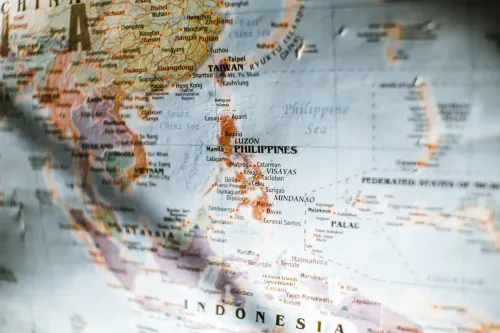
Philippines Geography for Learners: Islands & Language
Philippines geography for Tagalog learners: 7,641 islands, three island groups, and the Southern Luzon heartland where the Tagalog language was born.