
From root: leche flan
Conjugations
Past (Completed)
nagleche flan
nag-le-che-FLAN
made leche flan
Present (Incomplete)
nagleleche flan
nag-le-le-che-FLAN
making leche flan
Future (Contemplated)
magleleche flan
mag-le-le-che-FLAN
will make leche flan
Usage Note
Magleche flan is used when describing the act of preparing or cooking the traditional Filipino caramel custard, typically for celebrations or family gatherings.
Examples
" Marunong ka bang magleche flan? "
Natural Translation
Do you know how to make leche flan?
Literal Translation
Know you question make-leche-flan?
" Subukan nating magleche flan ngayon. "
Natural Translation
Let's try to make leche flan today.
Literal Translation
Try we to-make-leche-flan today.
" Habang nagleleche flan si Tita para sa Pasko, naghanda naman kami ng iba pang panghimagas sa kusina. "
Natural Translation
While Auntie was making leche flan for Christmas, we prepared other desserts in the kitchen.
Literal Translation
While making-leche-flan the auntie for Christmas, prepared meanwhile we of other desserts at kitchen.
Take Tagalog with you
The full course, a 12,500-word dictionary, and flashcards that make every word stick — free to start on iOS and Android.




Tagalog builds thousands of words from a few hundred roots.
How Tagalog words workWord family
leche flan has 3 related forms built from the same root.
Related Words
Explore Tagalog by topic
Free guides on grammar, vocabulary, and culture to take you past single-word lookups.

Spaced Repetition for Tagalog: How Flashcards Make Words Stick
Cramming Tagalog vocabulary fails. See how spaced repetition — the science behind smart flashcards — makes words stick for the long term.

How to Say "I Love You" in Tagalog: Phrases & Meaning
Learn how to say I love you in Tagalog. Mahal kita, Iniibig kita, and Filipino terms of endearment for partners, family, and friends — with cultural notes.
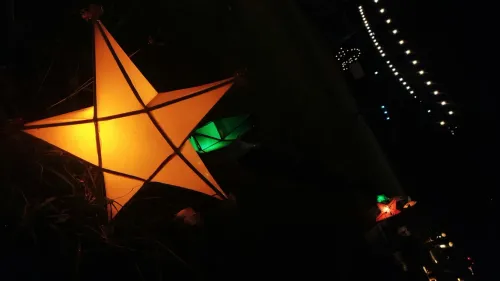
Philippine Christmas Traditions: World's Longest Holiday
Philippine Christmas traditions run four months — from Ber-month carols to Simbang Gabi dawn masses, Noche Buena feasts, and parol lanterns lighting every street.

Tagalog Word Order: Sentence Structure Made Simple
Why Tagalog puts the verb first, and how ang, ng, and sa markers work. A clear guide to VSO word order, forming questions, and negation.