metodiko
metódiko with stress marks
methodical
Usage Note
Metodiko describes a person or process that follows a careful and orderly method, and is used to compliment someone's systematic approach to work or problem-solving. It is more common in formal or professional settings than in casual conversation.
Examples
" Metodiko siya sa trabaho. "
Natural Translation
He/She is methodical at work.
Literal Translation
Methodical he/she in work.
" Siya ay napaka metodiko sa kanyang paggawa ng mga ulat. "
Natural Translation
He/She is very methodical in making his/her reports.
Literal Translation
He/She is very methodical in his/her making of plural report.
" Dahil napakametodiko ng kanyang pamamaraan, hindi nakapagtataka na laging maayos at walang mali ang mga resulta ng kanyang pananaliksik. "
Natural Translation
Because his/her approach is so methodical, it is no wonder that the results of his/her research are always orderly and error-free.
Literal Translation
Because very-methodical of his/her method, not surprising that always orderly and no error the results of his/her research.
Take Tagalog with you
The full course, a 12,500-word dictionary, and flashcards that make every word stick — free to start on iOS and Android.




Tagalog builds thousands of words from a few hundred roots.
How Tagalog words workRelated Words
Explore Tagalog by topic
Free guides on grammar, vocabulary, and culture to take you past single-word lookups.

Is Tagalog Hard to Learn? An Honest Answer
Tagalog takes around 1,100 hours to reach professional proficiency. Here is what is easy, what is hard, and what to expect at 3, 6, and 12 months.

Tagalog Slang Guide: 20 Words You'll Hear on TikTok
Tagalog slang explained: lodi, petmalu, werpa, astig, chika and more. Decode Filipino TikTok comments, group chats, and pop culture with this practical guide.

Tagalog Affixes Explained: A Beginner's Guide to Word Building
Tagalog affixes turn one root word into dozens of meanings. Learn prefixes, infixes, suffixes, and circumfixes with clear examples for beginners.
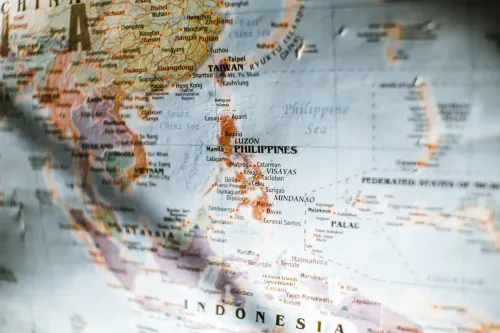
Philippines Geography for Learners: Islands & Language
Philippines geography for Tagalog learners: 7,641 islands, three island groups, and the Southern Luzon heartland where the Tagalog language was born.