Usage Note
Monghe is borrowed from Spanish monje and refers to a monk living under religious vows in a monastery. In the Philippines the term covers Catholic monks as well as Buddhist monks encountered in popular media, reflecting the broad cultural awareness of Filipinos.
Examples
" Nakatira ang monghe sa bundok. "
Natural Translation
The monk lives on the mountain.
Literal Translation
Living the monk on mountain.
" Ang mga monghe sa bundok ay naglalaan ng kanilang oras sa pananalangin. "
Natural Translation
The monks in the mountain dedicate their time to praying.
Literal Translation
The plural monk in mountain is dedicating of their time to praying.
" Ang mga monghe sa lumang monasteryo ay gumigising nang madaling-araw upang manalangin bago pa man sumikat ang araw sa kabundukan. "
Natural Translation
The monks in the old monastery wake up at dawn to pray even before the sun rises over the mountains.
Literal Translation
The plural monk in old monastery is waking at dawn in-order to-pray before even rise the sun in mountains.
Take Tagalog with you
The full course, a 12,500-word dictionary, and flashcards that make every word stick — free to start on iOS and Android.




Tagalog builds thousands of words from a few hundred roots.
How Tagalog words workRelated Words
Explore Tagalog by topic
Free guides on grammar, vocabulary, and culture to take you past single-word lookups.

Magkano: How to Ask "How Much" in Tagalog
Magkano means how much in Tagalog. Learn to ask a price, tell it apart from ilan and gaano, sound polite with po, and haggle at the palengke.

Ang, Ng, Sa: The 3 Tagalog Case Markers Explained
Ang, ng, sa are the three Tagalog case markers every noun takes. Learn what each does, the personal forms si/ni/kay, plurals with mga, and clear examples.

Po and Opo in Tagalog: Where to Put Them Right
Po and opo confuse learners — but placement follows one rule. Where po goes in a sentence, why it's opo not 'oo po', and the pronoun shift to learn.
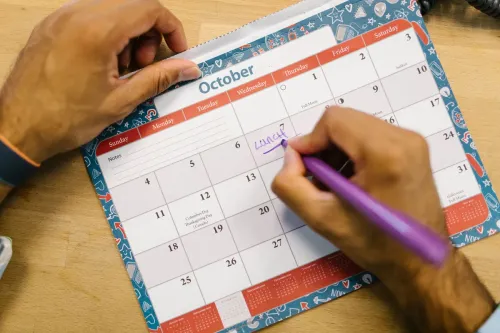
Days of the Week and Months in Tagalog
The days of the week and months in Tagalog are Spanish loanwords. Learn all 7 days and 12 months with pronunciation, plus how to say dates and 'every Monday.'