musikang bayan
músikang báyan with stress marks
folk music
Usage Note
Musikang bayan combines musika and bayan to mean traditional Filipino folk music rooted in regional and indigenous musical traditions. It is distinguished from OPM pop and is performed at cultural festivals and taught in schools as part of preserving Filipino heritage.
Examples
" Gusto ko ng musikang bayan. "
Natural Translation
I like folk music.
Literal Translation
Like I of folk-music.
" Ang mga matatanda ay mahilig makinig ng musikang bayan tuwing hapon. "
Natural Translation
The elders like to listen to folk music every afternoon.
Literal Translation
The plural elder is fond to-listen of folk-music every afternoon.
" Tuwing pista, tumutugtog ang mga matatanda ng musikang bayan upang ipagpatuloy ang tradisyong minana nila sa kanilang mga ninuno. "
Natural Translation
During every fiesta, the elders play folk music to continue the tradition they inherited from their ancestors.
Literal Translation
Every fiesta, playing the plural elder of folk-music in-order-to continue the tradition inherited their from their plural ancestor.
Take Tagalog with you
The full course, a 12,500-word dictionary, and flashcards that make every word stick — free to start on iOS and Android.




Tagalog builds thousands of words from a few hundred roots.
How Tagalog words workRelated Words
Explore Tagalog by topic
Free guides on grammar, vocabulary, and culture to take you past single-word lookups.
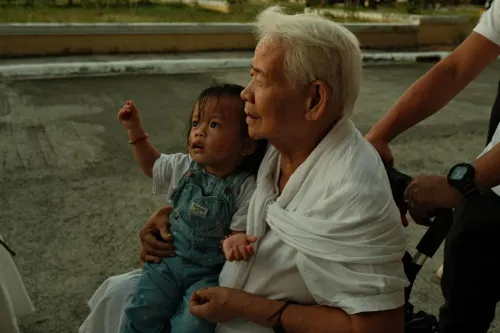
Po and Opo in Tagalog: Where to Put Them Right
Po and opo confuse learners — but placement follows one rule. Where po goes in a sentence, why it's opo not 'oo po', and the pronoun shift to learn.
Na vs -ng in Tagalog: The Linker Rule Made Simple
When do you use na vs -ng in Tagalog? One simple rule, with clear examples, memory tips, and common mistakes explained for English-speaking beginners.
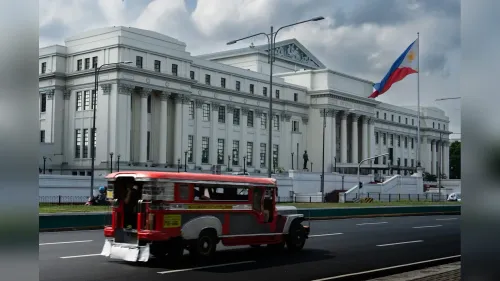
Is Tagalog Hard to Learn? An Honest Answer
Tagalog takes around 1,100 hours to reach professional proficiency. Here is what is easy, what is hard, and what to expect at 3, 6, and 12 months.
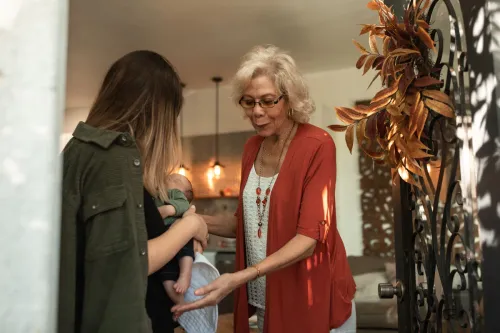
Mano Po and Filipino Etiquette: A Visitor's Guide
Mano po presses an elder's hand to your forehead as a blessing. Learn who to mano, how to lip-point, and the etiquette that wins over a Filipino family.