nanenegosyo
nanenégosyo with stress marks
tradable; used for business
From root: negosyo
Usage Note
Nanenegosyo is derived from negosyo (business, from Spanish negocio) and describes someone who is engaged in trading or commerce. It is used in everyday conversation about entrepreneurship, often with admiration for those who start early or work independently.
Examples
" Madaling nanenegosyo ang prutas. "
Natural Translation
Fruit is easy to trade.
Literal Translation
Easily tradable the fruit.
" Ang mga produktong ito ay madaling nanenegosyo sa palengke. "
Natural Translation
These products are easily tradable in the market.
Literal Translation
The plural product this is easily tradable in market.
" Ayon sa kanya, mas nanenegosyo ang mga lokal na produkto kaysa sa imported dahil mura ang halaga at mataas ang kalidad. "
Natural Translation
According to him, local products are more tradable than imported ones because the price is low and the quality is high.
Literal Translation
According to him, more tradable the plural local that product than the imported because cheap the price and high the quality.
Take Tagalog with you
The full course, a 12,500-word dictionary, and flashcards that make every word stick — free to start on iOS and Android.




Tagalog builds thousands of words from a few hundred roots.
How Tagalog words workWord family
negosyo has 7 related forms built from the same root.
Related Words
Explore Tagalog by topic
Free guides on grammar, vocabulary, and culture to take you past single-word lookups.

Languages of the Philippines: Tagalog, Cebuano, and More
Languages of the Philippines: one national language (Filipino) plus 180+ regional languages. Here's who speaks what, where, and why it matters to you.
Po and Opo in Tagalog: Where to Put Them Right
Po and opo confuse learners — but placement follows one rule. Where po goes in a sentence, why it's opo not 'oo po', and the pronoun shift to learn.

Magkano: How to Ask "How Much" in Tagalog
Magkano means how much in Tagalog. Learn to ask a price, tell it apart from ilan and gaano, sound polite with po, and haggle at the palengke.
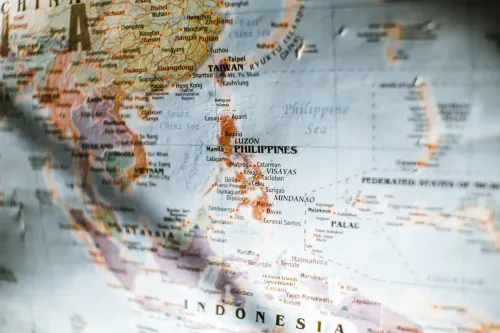
Philippines Geography for Learners: Islands & Language
Philippines geography for Tagalog learners: 7,641 islands, three island groups, and the Southern Luzon heartland where the Tagalog language was born.