ngiki
ngikî with stress marks
chilling or shivering
Usage Note
Ngiki describes the involuntary shivering or goosebump reaction to cold or fright. It is a common colloquial word used to describe both the physical response to low temperatures and the creeping chill felt when one is frightened or hears something eerie.
Examples
" May ngiki ako sa lamig. "
Natural Translation
I have the shivers from the cold.
Literal Translation
Have shivering I in cold.
" Hindi mawala ang ngiki niya dahil sa matinding lamig. "
Natural Translation
His/her shivering wouldn't go away due to the extreme cold.
Literal Translation
Not disappear the shivering his/her because of extreme cold.
" Pagkarinig ng kuwento tungkol sa multo, biglang dumaloy ang ngiki sa likod ng lahat ng nakikinig. "
Natural Translation
Upon hearing the ghost story, a chill suddenly ran down the backs of everyone listening.
Literal Translation
Upon-hearing of story about the ghost, suddenly flowed the shivering on back of all of listening.
Take Tagalog with you
The full course, a 12,500-word dictionary, and flashcards that make every word stick — free to start on iOS and Android.




Tagalog builds thousands of words from a few hundred roots.
How Tagalog words workRelated Words
Explore Tagalog by topic
Free guides on grammar, vocabulary, and culture to take you past single-word lookups.

Tagalog Slang Guide: 20 Words You'll Hear on TikTok
Tagalog slang explained: lodi, petmalu, werpa, astig, chika and more. Decode Filipino TikTok comments, group chats, and pop culture with this practical guide.
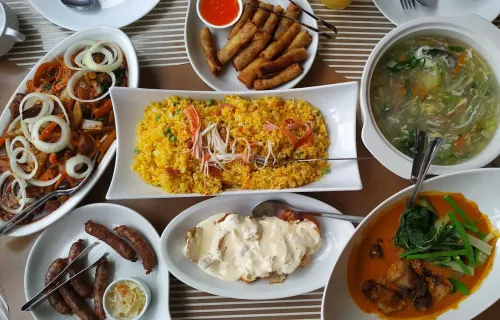
Filipino Food: 12 Essential Dishes (With Tagalog Names)
Filipino food, from adobo to halo-halo: learn the Tagalog names, pronunciations, and ingredients behind 12 dishes you'll want to try on your first trip.

Ng vs Nang in Tagalog: The Spelling Rule
Ng vs nang sound identical but spell differently. Use ng to mark nouns (of, the object), and nang for how, when, repetition, and counting time.

Filipino Family Words and Honorifics: Ate, Kuya & Tita
Filipino family words like ate, kuya, tita, tito, lolo, and lola go far beyond family — learn how Filipinos use them with strangers, plus mano po etiquette.