nisnis
nísnis with stress marks
unravel (edge of cloth); frayed
Usage Note
Nisnis describes the fraying or unraveling of threads at the edge of fabric, most commonly at the hem or seams of clothing. It is used both as a verb (to fray) and as an adjective (frayed). The word is common in practical household and sewing contexts and signals that a garment needs mending or replacement.
Examples
" May nisnis ang aking damit. "
Natural Translation
My clothes have fraying.
Literal Translation
Has fraying the my clothes.
" Pansinin ang nisnis sa dulo ng iyong manggas. "
Natural Translation
Notice the fraying at the end of your sleeve.
Literal Translation
Notice the fraying at end of your sleeve.
" Bago pa man tuluyang lumala ang nisnis sa laylayan ng kanyang paboritong dyaket, dali-dali niya itong dinala sa mananahi para tahiin. "
Natural Translation
Before the fraying at the hem of her favorite jacket got completely worse, she quickly brought it to the seamstress to be sewn.
Literal Translation
Before still completely worsened the fraying at hem of her favorite jacket, quickly she it brought to seamstress for to-be-sewn.
Take Tagalog with you
The full course, a 12,500-word dictionary, and flashcards that make every word stick — free to start on iOS and Android.




Tagalog builds thousands of words from a few hundred roots.
How Tagalog words workActor Focus Verbs
Related Words
Explore Tagalog by topic
Free guides on grammar, vocabulary, and culture to take you past single-word lookups.

Ang, Ng, Sa: The 3 Tagalog Case Markers Explained
Ang, ng, sa are the three Tagalog case markers every noun takes. Learn what each does, the personal forms si/ni/kay, plurals with mga, and clear examples.
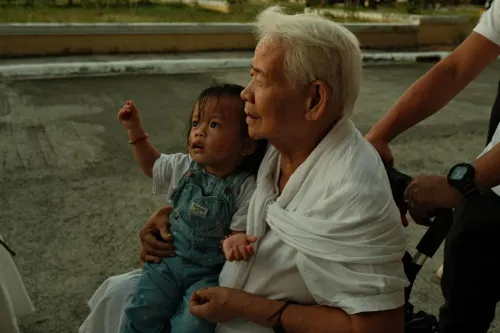
Po and Opo in Tagalog: Where to Put Them Right
Po and opo confuse learners — but placement follows one rule. Where po goes in a sentence, why it's opo not 'oo po', and the pronoun shift to learn.

Tagalog Pronouns Explained: Complete Chart with Examples
Every Tagalog pronoun explained with clear charts: ang/ng/sa forms, tayo vs kami, ikaw vs ka, politeness markers, and the mistakes beginners make.
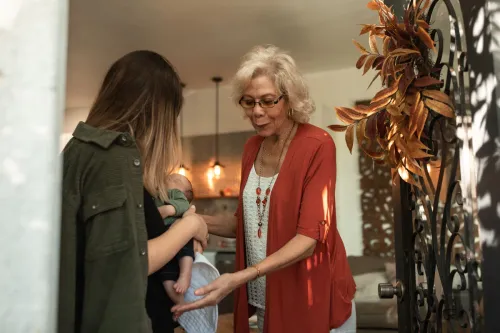
Mano Po and Filipino Etiquette: A Visitor's Guide
Mano po presses an elder's hand to your forehead as a blessing. Learn who to mano, how to lip-point, and the etiquette that wins over a Filipino family.