noon
then; previously; in the past; when
Usage Note
Noon is a high-frequency grammatical word in Tagalog serving both as a temporal adverb (previously, in the past) and as a conjunction introducing past-time clauses (when). It is essential for narrating past events and distinguishes past time reference from nang (which can mark completed actions). It is one of the most commonly used words in spoken and written Tagalog.
Examples
" Mahirap kami noon. "
Natural Translation
We were poor in the past.
Literal Translation
Poor we in-the-past.
" Noon, simple lamang ang pamumuhay sa nayon. "
Natural Translation
In the past, life in the village was simple.
Literal Translation
In-the-past, simple only the life in village.
" Noong bata pa ako, naglalakad pa kami papuntang paaralan dahil wala kaming sasakyan. "
Natural Translation
When I was still a child, we used to walk to school because we had no vehicle.
Literal Translation
When child still I, walking still we going-to school because none we vehicle.
Take Tagalog with you
The full course, a 12,500-word dictionary, and flashcards that make every word stick — free to start on iOS and Android.




Tagalog builds thousands of words from a few hundred roots.
How Tagalog words workRelated Words
Explore Tagalog by topic
Free guides on grammar, vocabulary, and culture to take you past single-word lookups.
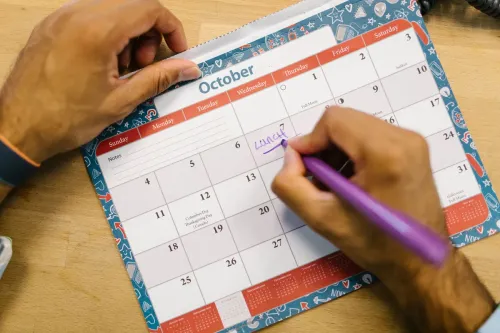
Days of the Week and Months in Tagalog
The days of the week and months in Tagalog are Spanish loanwords. Learn all 7 days and 12 months with pronunciation, plus how to say dates and 'every Monday.'

Philippines Geography for Learners: Islands & Language
Philippines geography for Tagalog learners: 7,641 islands, three island groups, and the Southern Luzon heartland where the Tagalog language was born.

Is Tagalog Hard to Learn? An Honest Answer
Tagalog takes around 1,100 hours to reach professional proficiency. Here is what is easy, what is hard, and what to expect at 3, 6, and 12 months.

Na vs -ng in Tagalog: The Linker Rule Made Simple
When do you use na vs -ng in Tagalog? One simple rule, with clear examples, memory tips, and common mistakes explained for English-speaking beginners.