obitwaryo
obitwáryo with stress marks
obituary; death announcement
Usage Note
Obitwaryo is adapted from English 'obituary' and is used in newspapers and online publications to announce and memorialize a person's death. Filipino obituaries often include extensive family listings and religious passages, reflecting the culture's strong family ties and Catholic traditions.
Examples
" Binasa niya ang obitwaryo. "
Natural Translation
He/she read the obituary.
Literal Translation
Read he/she the obituary.
" Nakasulat ang kanyang obitwaryo sa pahayagan. "
Natural Translation
His/her obituary is written in the newspaper.
Literal Translation
Written the his/her obituary in newspaper.
" Habang binabasa ang obitwaryo sa pahayagan, naalala ng pamilya ang mga magagandang alaala na naiwan ng kanilang yumaong lolo. "
Natural Translation
While reading the obituary in the newspaper, the family remembered the beautiful memories left behind by their late grandfather.
Literal Translation
While is-read the obituary in newspaper, remembered by family the beautiful memories that left by their late grandfather.
Take Tagalog with you
The full course, a 12,500-word dictionary, and flashcards that make every word stick — free to start on iOS and Android.




Tagalog builds thousands of words from a few hundred roots.
How Tagalog words workRelated Words
- AWOL absence without leave
- Amboy short for American boy
- Ati ethnolinguistic group in Panay
- Balbalan ethnolinguistic group (Kalinga)
- Hiligaynon ethnolinguistic group/language
- Ilokana female native of the Ilocos region; Ilokana woman
- Ilokano Ethnolinguistic group in Ilocos
- Ilonggo Language/People of Western Visayas
Explore Tagalog by topic
Free guides on grammar, vocabulary, and culture to take you past single-word lookups.

Ng vs Nang in Tagalog: The Spelling Rule
Ng vs nang sound identical but spell differently. Use ng to mark nouns (of, the object), and nang for how, when, repetition, and counting time.
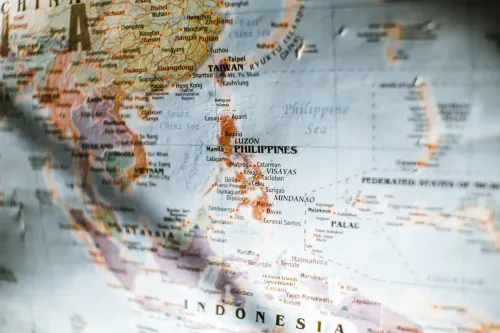
Philippines Geography for Learners: Islands & Language
Philippines geography for Tagalog learners: 7,641 islands, three island groups, and the Southern Luzon heartland where the Tagalog language was born.

Tagalog Question Words: Ano, Sino, Saan & More
Tagalog question words like ano, sino, and saan need the right frame to work. Learn the ang-vs-pronoun rule, confusable pairs, and the ba particle with audio.

Is Tagalog Hard to Learn? An Honest Answer
Tagalog takes around 1,100 hours to reach professional proficiency. Here is what is easy, what is hard, and what to expect at 3, 6, and 12 months.