pamasahe
pamasáhe with stress marks
fare; money for transport
Usage Note
Pamasahe is the fare you pay on a jeepney, bus, tricycle, or any ride, and also the money set aside for it. It comes from pasahe (Spanish pasaje) with the pang- prefix, and it is the word commuters use when asking Magkano ang pamasahe?
Examples
" Wala akong pamasahe. "
Natural Translation
I have no money for the fare.
Literal Translation
None I-link fare.
" Magkano ang pamasahe papuntang Makati? "
Natural Translation
How much is the fare to Makati?
Literal Translation
How-much the fare going-to Makati?
" Tumaas na naman ang pamasahe sa dyip, kaya naglalakad na lang ako papunta sa opisina kapag hindi umuulan. "
Natural Translation
The jeepney fare went up again, so I just walk to the office when it isn't raining.
Literal Translation
Went-up already again the fare on jeepney, so walking already only I going to office when not raining.
Take Tagalog with you
The full course, a 12,500-word dictionary, and flashcards that make every word stick — free to start on iOS and Android.


Tagalog builds thousands of words from a few hundred roots.
How Tagalog words workRelated Words
Explore Tagalog by topic
Free guides on grammar, vocabulary, and culture to take you past single-word lookups.

Tagalog Greetings: How to Say Hello, Goodbye & Po/Opo
Master Tagalog greetings with pronunciation: kumusta, magandang umaga, po and opo polite forms, time-of-day phrases, and the mano po tradition.
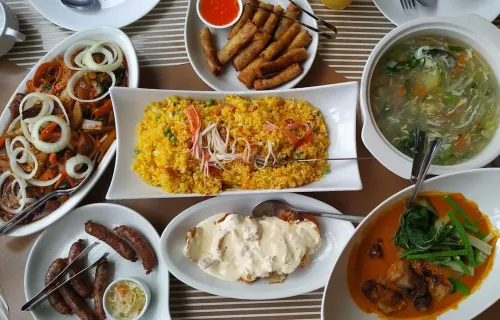
Filipino Food: 12 Essential Dishes (With Tagalog Names)
Filipino food, from adobo to halo-halo: learn the Tagalog names, pronunciations, and ingredients behind 12 dishes you'll want to try on your first trip.
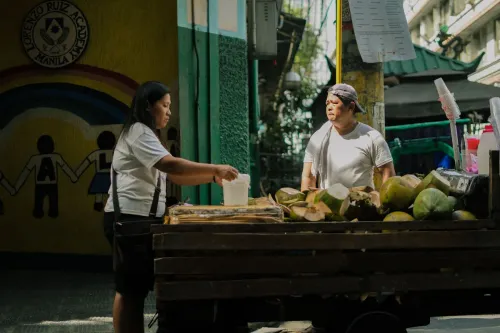
Tagalog Question Words: Ano, Sino, Saan & More
Tagalog question words like ano, sino, and saan need the right frame to work. Learn the ang-vs-pronoun rule, confusable pairs, and the ba particle with audio.

Tagalog Word Order: Sentence Structure Made Simple
Why Tagalog puts the verb first, and how ang, ng, and sa markers work. A clear guide to VSO word order, forming questions, and negation.