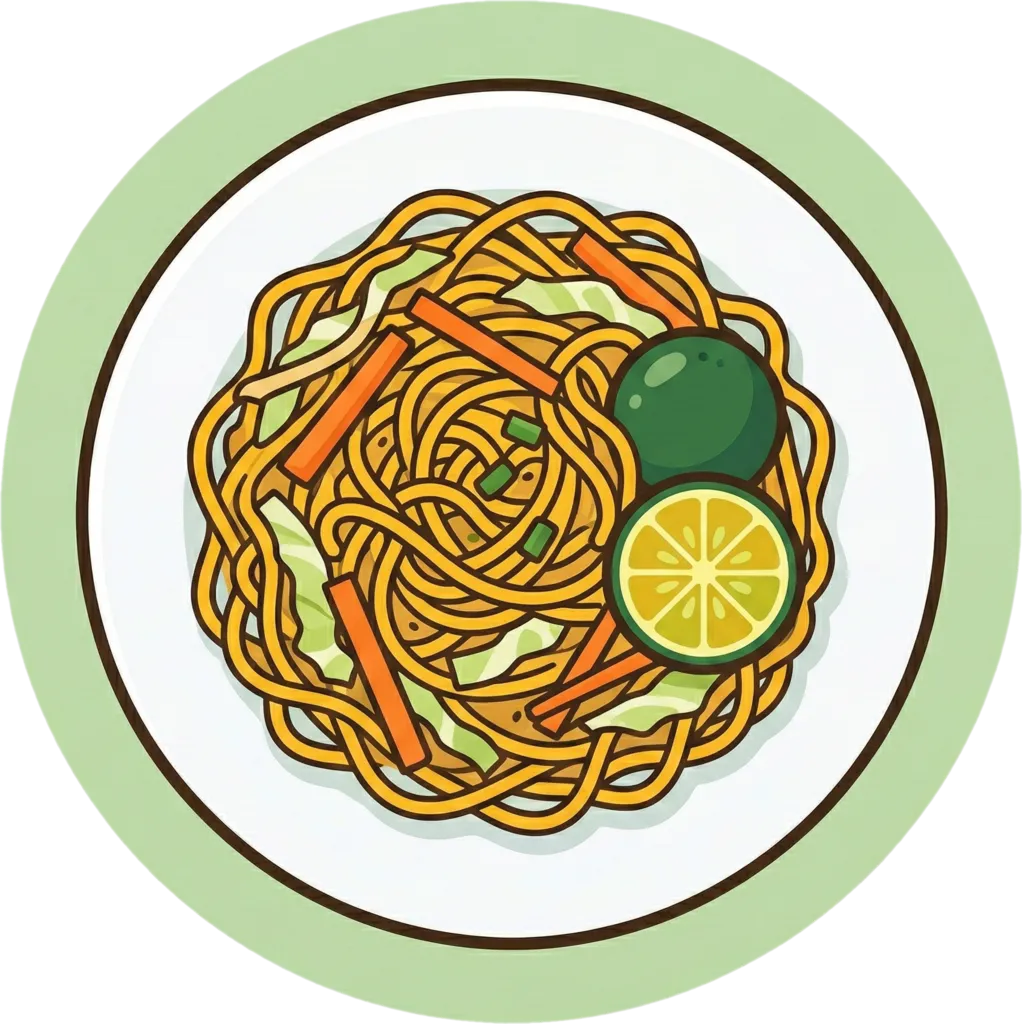
From root: pansit
Conjugations
Past (Completed)
ipinansit
i-pi-nan-SIT
used for cooking noodles
Present (Incomplete)
ipinapansit
i-pi-na-pan-SIT
is using for cooking noodles
Future (Contemplated)
ipapansit
i-pa-pan-SIT
will use for cooking noodles
Usage Note
Ipansit is used when specifying a particular ingredient, like meat or vegetables, that is to be included or used as a main component in cooking a noodle dish. It is a specific instrumental-focus verb common in household cooking contexts.
Examples
" Ipansit mo ang gulay. "
Natural Translation
Use the vegetables for the noodles.
Literal Translation
Use-for-noodles you the vegetables.
" Kailangan mong ipansit ang noodles. "
Natural Translation
You need to use the noodles for cooking noodles.
Literal Translation
Need you use-for-noodles the noodles.
" Dahil wala nang ibang sangkap sa ref, ipinansit na lamang namin ang natirang manok at repolyo. "
Natural Translation
Since there were no other ingredients in the fridge, we just used the leftover chicken and cabbage for the noodles.
Literal Translation
Because none anymore other ingredient in fridge, used-for-noodles just by-us the leftover chicken and cabbage.
Take Tagalog with you
The full course, a 12,500-word dictionary, and flashcards that make every word stick — free to start on iOS and Android.




Tagalog builds thousands of words from a few hundred roots.
How Tagalog words workWord family
pansit has 5 related forms built from the same root.
Related Words
Explore Tagalog by topic
Free guides on grammar, vocabulary, and culture to take you past single-word lookups.
May vs Mayroon vs Meron: Have & There Is
May vs mayroon in Tagalog finally made simple: one rule decides which to use, plus how meron and wala fit the same have and there-is family.

Mano Po and Filipino Etiquette: A Visitor's Guide
Mano po presses an elder's hand to your forehead as a blessing. Learn who to mano, how to lip-point, and the etiquette that wins over a Filipino family.

Po and Opo in Tagalog: Where to Put Them Right
Po and opo confuse learners — but placement follows one rule. Where po goes in a sentence, why it's opo not 'oo po', and the pronoun shift to learn.

Ng vs Nang in Tagalog: The Spelling Rule
Ng vs nang sound identical but spell differently. Use ng to mark nouns (of, the object), and nang for how, when, repetition, and counting time.