parte
párte with stress marks
part; portion; share
Usage Note
Parte, from Spanish parte, means a part or portion of something and also a person's share. It is the casual counterpart of the native bahagi, and it is common in phrases like parte ng katawan (part of the body) and parte ko (my share).
Examples
" Ito ang parte mo. "
Natural Translation
This is your share.
Literal Translation
This the share your.
" Anong parte ng manok ang gusto mo? "
Natural Translation
Which part of the chicken do you want?
Literal Translation
What-link part of chicken the want you?
" Ang pinakamahirap na parte ng pag-aaral ng Tagalog para sa akin ay ang mga pandiwa. "
Natural Translation
The hardest part of learning Tagalog for me is the verbs.
Literal Translation
The most-difficult link part of studying of Tagalog for to me is the plural verbs.
Take Tagalog with you
The full course, a 12,500-word dictionary, and flashcards that make every word stick — free to start on iOS and Android.


Tagalog builds thousands of words from a few hundred roots.
How Tagalog words workRelated Words
- AWOL absence without leave
- Amboy short for American boy
- Ati ethnolinguistic group in Panay
- Balbalan ethnolinguistic group (Kalinga)
- Hiligaynon ethnolinguistic group/language
- Ilokana female native of the Ilocos region; Ilokana woman
- Ilokano Ethnolinguistic group in Ilocos
- Ilonggo Language/People of Western Visayas
Explore Tagalog by topic
Free guides on grammar, vocabulary, and culture to take you past single-word lookups.

Is Tagalog Hard to Learn? An Honest Answer
Tagalog takes around 1,100 hours to reach professional proficiency. Here is what is easy, what is hard, and what to expect at 3, 6, and 12 months.

Languages of the Philippines: Tagalog, Cebuano, and More
Languages of the Philippines: one national language (Filipino) plus 180+ regional languages. Here's who speaks what, where, and why it matters to you.
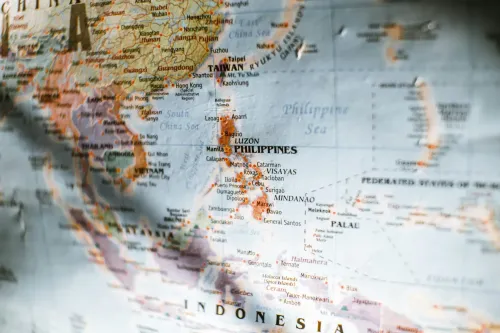
Philippines Geography for Learners: Islands & Language
Philippines geography for Tagalog learners: 7,641 islands, three island groups, and the Southern Luzon heartland where the Tagalog language was born.

Tagalog Slang Guide: 20 Words You'll Hear on TikTok
Tagalog slang explained: lodi, petmalu, werpa, astig, chika and more. Decode Filipino TikTok comments, group chats, and pop culture with this practical guide.