From root: patay
Conjugations
Past (Completed)
namatay
na-ma-TAY
died
Present (Incomplete)
namamatay
na-ma-ma-TAY
is dying
Future (Contemplated)
mamamatay
ma-ma-ma-TAY
will die
Usage Note
Mamatay is used when referring to the natural or biological process of dying for living things like humans, animals, and plants. While it is the standard term, speakers often use euphemisms like 'pumanaw' or 'yumao' in formal contexts or to show more respect to the deceased.
Examples
" Ayaw kong mamatay nang maaga. "
Natural Translation
I don't want to die early.
Literal Translation
Don't-want I die [linker] early.
" Takot siyang mamatay sa sakit. "
Natural Translation
He is afraid to die from the illness.
Literal Translation
Afraid he die at illness.
" Kung hindi natin didiligan ang mga halaman, tiyak na mamamatay ang mga ito sa loob ng ilang araw. "
Natural Translation
If we don't water the plants, they will surely die within a few days.
Literal Translation
If not we will-water the plants, sure [linker] will-die the these in within of few days.
Take Tagalog with you
The full course, a 12,500-word dictionary, and flashcards that make every word stick — free to start on iOS and Android.




Tagalog builds thousands of words from a few hundred roots.
How Tagalog words workWord family
patay has 11 related forms built from the same root.
Related Words
Explore Tagalog by topic
Free guides on grammar, vocabulary, and culture to take you past single-word lookups.

Tagalog Greetings: How to Say Hello, Goodbye & Po/Opo
Master Tagalog greetings with pronunciation: kumusta, magandang umaga, po and opo polite forms, time-of-day phrases, and the mano po tradition.
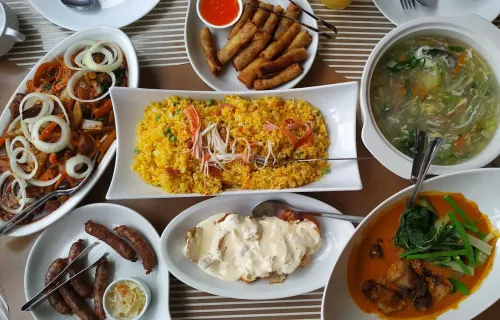
Filipino Food: 12 Essential Dishes (With Tagalog Names)
Filipino food, from adobo to halo-halo: learn the Tagalog names, pronunciations, and ingredients behind 12 dishes you'll want to try on your first trip.

Magkano: How to Ask "How Much" in Tagalog
Magkano means how much in Tagalog. Learn to ask a price, tell it apart from ilan and gaano, sound polite with po, and haggle at the palengke.

Mano Po and Filipino Etiquette: A Visitor's Guide
Mano po presses an elder's hand to your forehead as a blessing. Learn who to mano, how to lip-point, and the etiquette that wins over a Filipino family.