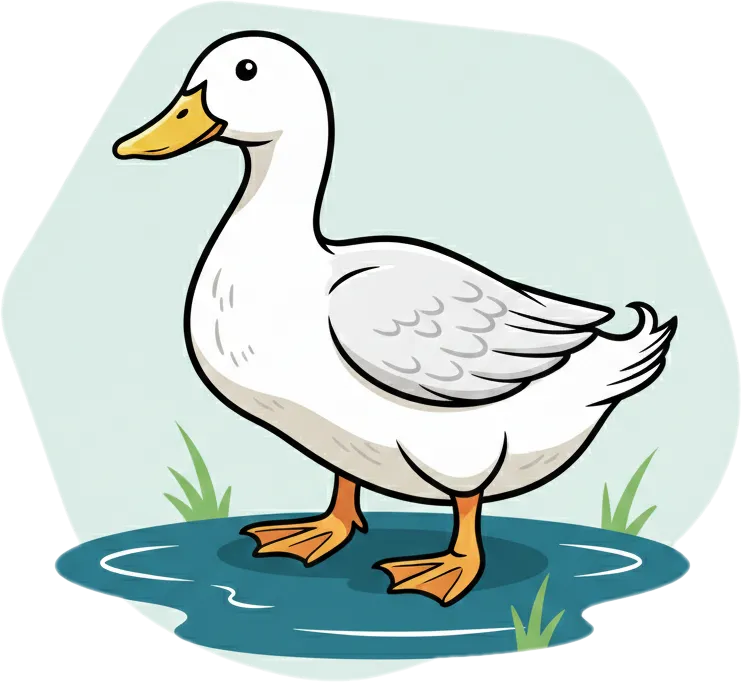
From root: pato
Conjugations
Past (Completed)
nagpato
nag-pa-TO
raised ducks
Present (Incomplete)
nagpapato
nag-pa-pa-TO
raising ducks
Future (Contemplated)
magpapato
mag-pa-pa-TO
will raise ducks
Usage Note
Magpato is used when referring to the livelihood or hobby of raising ducks, particularly for producing eggs or meat in agricultural settings. It is a specific term often heard in rural provinces where duck farming is a common source of income.
Examples
" Gusto naming magpato sa bukid. "
Natural Translation
We want to raise ducks on the farm.
Literal Translation
Want we raise-ducks on farm.
" Mahirap magpato ng marami. "
Natural Translation
It is hard to raise many ducks.
Literal Translation
Difficult to-raise-ducks of many.
" Nagsimula silang magpato sa probinsya dahil mas mataas ang kita mula sa mga itlog kaysa sa pagtatanim ng palay. "
Natural Translation
They started raising ducks in the province because the income from eggs is higher than from planting rice.
Literal Translation
Started they raise-ducks in province because more high the income from the eggs than from planting of rice.
Take Tagalog with you
The full course, a 12,500-word dictionary, and flashcards that make every word stick — free to start on iOS and Android.




Tagalog builds thousands of words from a few hundred roots.
How Tagalog words workWord family
pato has 4 related forms built from the same root.
Related Words
Explore Tagalog by topic
Free guides on grammar, vocabulary, and culture to take you past single-word lookups.

Seasons in the Philippines: A Tagalog Guide
The Philippines has two seasons, not four. Learn tag-araw, tag-ulan, and taglamig, the generative tag- prefix, and the weather vocabulary to match.

Tagalog Verb Conjugation: Aspects Made Simple
Tagalog verb conjugation uses aspects, not tenses. Learn the three aspects with -um- and mag- verbs, one reduplication rule, and clear example tables.
Tagalog vs Filipino: What's the Difference & Which to Learn
Tagalog and Filipino aren't the same language — but they overlap almost completely. Here's the real difference and which one you should actually learn.

Mano Po and Filipino Etiquette: A Visitor's Guide
Mano po presses an elder's hand to your forehead as a blessing. Learn who to mano, how to lip-point, and the etiquette that wins over a Filipino family.