pato
páto with stress marks
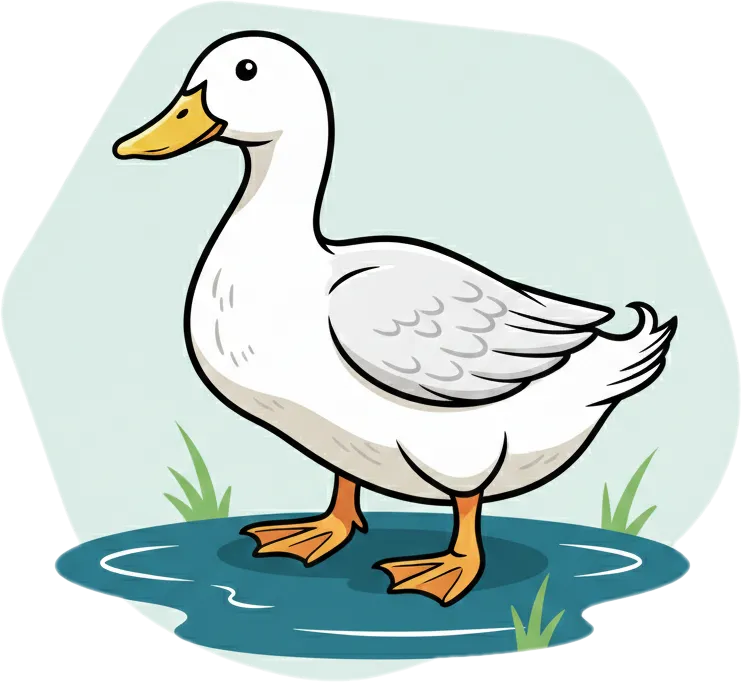
duck
Usage Note
Pato is the standard term for duck and is culturally significant for the production of salted eggs and the famous delicacy balut. It is commonly raised on farms or in local backyards for both its meat and its eggs.
Examples
" May pato sa bukid. "
Natural Translation
There is a duck on the farm.
Literal Translation
Has duck in farm.
" Ang pato ay lumalangoy sa lawa. "
Natural Translation
The duck is swimming in the lake.
Literal Translation
The duck swims in the lake.
" Mula sa mga itlog ng pato nagagawa ang balut at ang maalat na itlog na paborito ng maraming Pilipino. "
Natural Translation
From duck eggs come balut and salted eggs, which are favorites of many Filipinos.
Literal Translation
From the eggs of duck are-made the balut and the salty that egg that favorite of many Filipino.
Take Tagalog with you
The full course, a 12,500-word dictionary, and flashcards that make every word stick — free to start on iOS and Android.




Tagalog builds thousands of words from a few hundred roots.
How Tagalog words workDerived Words
Actor Focus Verbs
Object Focus Verbs
Related Words
Explore Tagalog by topic
Free guides on grammar, vocabulary, and culture to take you past single-word lookups.

Tagalog Greetings: How to Say Hello, Goodbye & Po/Opo
Master Tagalog greetings with pronunciation: kumusta, magandang umaga, po and opo polite forms, time-of-day phrases, and the mano po tradition.

Ang, Ng, Sa: The 3 Tagalog Case Markers Explained
Ang, ng, sa are the three Tagalog case markers every noun takes. Learn what each does, the personal forms si/ni/kay, plurals with mga, and clear examples.

How Long Does It Take to Learn Tagalog?
Survival Tagalog takes ~3-4 weeks and comfortable conversation 6-12 months. FSI's 1,100 hours is the professional bar, not the talking-to-family bar.

Tagalog vs Filipino: What's the Difference & Which to Learn
Tagalog and Filipino aren't the same language — but they overlap almost completely. Here's the real difference and which one you should actually learn.