problema
probléma with stress marks
problem
Usage Note
Problema, from Spanish problema, is the everyday word for a problem or trouble, far more common in speech than the formal native suliranin. Walang problema (no problem) is a stock reply, and may problema covers anything from a broken phone to a serious personal difficulty.
Examples
" Walang problema sa akin. "
Natural Translation
It's no problem for me.
Literal Translation
None problem to me.
" May problema ako sa trabaho ngayon. "
Natural Translation
I have a problem at work right now.
Literal Translation
There-is problem I at work now.
" Kung may problema ka, sabihin mo agad sa akin para matulungan kita bago pa ito lumala. "
Natural Translation
If you have a problem, tell me right away so I can help you before it gets worse.
Literal Translation
If there-is problem you, say you immediately to me so-that can-help I-you before still it worsens.
Take Tagalog with you
The full course, a 12,500-word dictionary, and flashcards that make every word stick — free to start on iOS and Android.




Tagalog builds thousands of words from a few hundred roots.
How Tagalog words workRelated Words
- AWOL absence without leave
- Amboy short for American boy
- Ati ethnolinguistic group in Panay
- Balbalan ethnolinguistic group (Kalinga)
- Hiligaynon ethnolinguistic group/language
- Ilokana female native of the Ilocos region; Ilokana woman
- Ilokano Ethnolinguistic group in Ilocos
- Ilonggo Language/People of Western Visayas
Explore Tagalog by topic
Free guides on grammar, vocabulary, and culture to take you past single-word lookups.

Tagalog Verb Conjugation: Aspects Made Simple
Tagalog verb conjugation uses aspects, not tenses. Learn the three aspects with -um- and mag- verbs, one reduplication rule, and clear example tables.

Tagalog Greetings: How to Say Hello, Goodbye & Po/Opo
Master Tagalog greetings with pronunciation: kumusta, magandang umaga, po and opo polite forms, time-of-day phrases, and the mano po tradition.

Tagalog Affixes Explained: A Beginner's Guide to Word Building
Tagalog affixes turn one root word into dozens of meanings. Learn prefixes, infixes, suffixes, and circumfixes with clear examples for beginners.
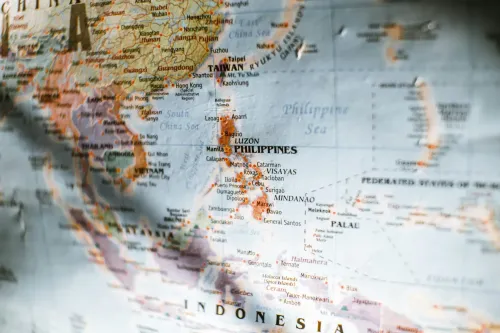
Philippines Geography for Learners: Islands & Language
Philippines geography for Tagalog learners: 7,641 islands, three island groups, and the Southern Luzon heartland where the Tagalog language was born.