sumabak
sumábak with stress marks
to plunge in
From root: sabak
Conjugations
Past (Completed)
sumabak
su-MA-bak
plunged in
Present (Incomplete)
sumasabak
su-ma-SA-bak
is plunging in
Future (Contemplated)
sasabak
sa-SA-bak
will plunge in
Usage Note
Sumabak is the actor-focus -um- form of sabak, conveying headlong, often reckless commitment to a fight, contest, or challenge. The cultural weight is on bravery verging on impetuousness — a bold, unthinking plunge rather than a calculated entry.
Examples
" Sumabak siya sa laban. "
Natural Translation
He/She plunged into the fight.
Literal Translation
Plunged he/she in fight.
" Handa na sumabak ang sundalo sa matinding laban. "
Natural Translation
The soldier is ready to plunge into the intense fight.
Literal Translation
Ready to plunge in the soldier in intense fight.
" Kahit alam niyang malakas ang kalaban, sumabak pa rin siya sa labanan upang ipagtanggol ang kanyang karangalan. "
Natural Translation
Even though he knew the opponent was strong, he still plunged into the fight to defend his honor.
Literal Translation
Even-though knew he strong the opponent, plunged still he in fight in-order-to defend the his honor.
Take Tagalog with you
The full course, a 12,500-word dictionary, and flashcards that make every word stick — free to start on iOS and Android.




Tagalog builds thousands of words from a few hundred roots.
How Tagalog words workRelated Words
Explore Tagalog by topic
Free guides on grammar, vocabulary, and culture to take you past single-word lookups.

Tagalog Affixes Explained: A Beginner's Guide to Word Building
Tagalog affixes turn one root word into dozens of meanings. Learn prefixes, infixes, suffixes, and circumfixes with clear examples for beginners.

Magkano: How to Ask "How Much" in Tagalog
Magkano means how much in Tagalog. Learn to ask a price, tell it apart from ilan and gaano, sound polite with po, and haggle at the palengke.
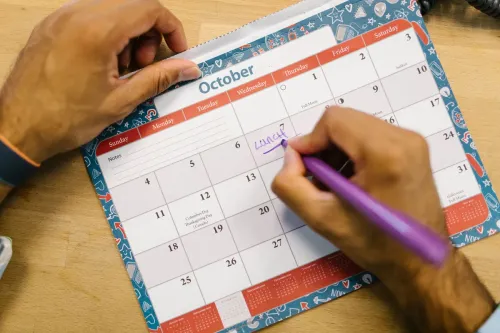
Days of the Week and Months in Tagalog
The days of the week and months in Tagalog are Spanish loanwords. Learn all 7 days and 12 months with pronunciation, plus how to say dates and 'every Monday.'

Tagalog Pronouns Explained: Complete Chart with Examples
Every Tagalog pronoun explained with clear charts: ang/ng/sa forms, tayo vs kami, ikaw vs ka, politeness markers, and the mistakes beginners make.