isabit
isábit with stress marks
to hang [it]
From root: sabit
Conjugations
Past (Completed)
isinabit
i-si-NA-bit
hung
Present (Incomplete)
isinasabit
i-si-na-SA-bit
is being hung
Future (Contemplated)
isasabit
i-sa-SA-bit
will be hung
Usage Note
Isabit is the conveyance-focus i- form of sabit, used when the item being hung is the sentence topic. Applies to pictures on walls, bags on hooks, garments on hangers, or any object suspended from a peg or nail; actor-focus counterpart is magsabit.
Examples
" Isabit mo ang bag sa pako. "
Natural Translation
Hang the bag on the nail.
Literal Translation
Hang you the bag on nail.
" Magandang isabit ang bagong painting sa dingding ng sala. "
Natural Translation
It is good to hang the new painting on the living room wall.
Literal Translation
Good to hang the new painting on wall of living room.
" Bago dumating ang mga bisita, isabit natin ang mga lumang larawan ng pamilya sa hagdanan. "
Natural Translation
Before the guests arrive, let's hang the old family photos along the stairway.
Literal Translation
Before to-arrive the guests, hang we the old pictures of family on stairway.
Take Tagalog with you
The full course, a 12,500-word dictionary, and flashcards that make every word stick — free to start on iOS and Android.




Tagalog builds thousands of words from a few hundred roots.
How Tagalog words workWord family
sabit has 1 related form built from the same root.
Related Words
Explore Tagalog by topic
Free guides on grammar, vocabulary, and culture to take you past single-word lookups.
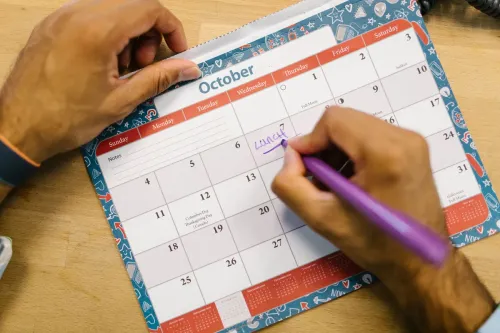
Days of the Week and Months in Tagalog
The days of the week and months in Tagalog are Spanish loanwords. Learn all 7 days and 12 months with pronunciation, plus how to say dates and 'every Monday.'

Philippines Geography for Learners: Islands & Language
Philippines geography for Tagalog learners: 7,641 islands, three island groups, and the Southern Luzon heartland where the Tagalog language was born.

Mano Po and Filipino Etiquette: A Visitor's Guide
Mano po presses an elder's hand to your forehead as a blessing. Learn who to mano, how to lip-point, and the etiquette that wins over a Filipino family.

Tagalog Verb Focus System Explained (It's Not Active vs. Passive)
The Tagalog verb focus system isn't active vs. passive. Learn actor focus, object focus, and more with clear examples that finally make it click.