isaklob
isáklob with stress marks
to put (it) over as a cover
From root: saklob
Conjugations
Past (Completed)
isinaklob
i-si-NAK-lob
put as a cover
Present (Incomplete)
isinasaklob
i-si-na-SAK-lob
is being put as a cover
Future (Contemplated)
isasaklob
i-sa-SAK-lob
will be put as a cover
Usage Note
Isaklob is the conveyance-focus i- form of saklob, used when the lid or covering being placed is the sentence topic. It pairs with the actor-focus magsaklob and is most natural when specifying which cover or hat is being put on or over something.
Examples
" Isaklob mo ang takip sa kaldero. "
Natural Translation
Put the lid over the pot.
Literal Translation
Put-over you the lid on pot.
" Kailangan isaklob ang malaking balde sa halaman upang hindi madaanan ng aso. "
Natural Translation
It is necessary to put the big bucket over the plant as a cover so dogs won't walk over it.
Literal Translation
Need put-over-cover big bucket plant so-not pass-by dog.
" Bago kayo umalis, isaklob ninyo ang lambat sa pagkain upang hindi madapuan ng langaw habang wala kayo. "
Natural Translation
Before you leave, put the net over the food as a cover so that flies won't land on it while you're away.
Literal Translation
Before you leave, put-over-cover you-all the net on food so-that not landed-on by fly while away you-all.
Take Tagalog with you
The full course, a 12,500-word dictionary, and flashcards that make every word stick — free to start on iOS and Android.




Tagalog builds thousands of words from a few hundred roots.
How Tagalog words workWord family
saklob has 1 related form built from the same root.
Related Words
Explore Tagalog by topic
Free guides on grammar, vocabulary, and culture to take you past single-word lookups.

Languages of the Philippines: Tagalog, Cebuano, and More
Languages of the Philippines: one national language (Filipino) plus 180+ regional languages. Here's who speaks what, where, and why it matters to you.
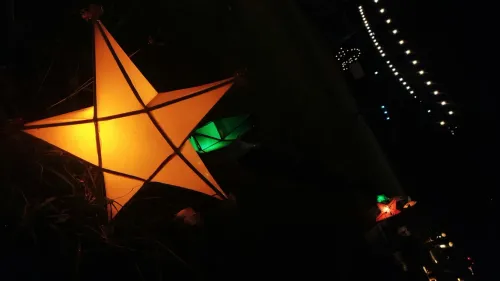
Philippine Christmas Traditions: World's Longest Holiday
Philippine Christmas traditions run four months — from Ber-month carols to Simbang Gabi dawn masses, Noche Buena feasts, and parol lanterns lighting every street.

Tagalog Time Expressions: Past, Present & Future Guide
Tagalog has no tenses — it uses aspect. Learn time words, days of the week, clock time, and the aspect system, with vocabulary tables and cultural notes.

Tagalog Greetings: How to Say Hello, Goodbye & Po/Opo
Master Tagalog greetings with pronunciation: kumusta, magandang umaga, po and opo polite forms, time-of-day phrases, and the mano po tradition.