saksi
saksí with stress marks
witness; to testify
Usage Note
Saksi is used in both legal and informal contexts. In courtroom settings, a saksi provides sworn testimony; in everyday life, someone who sees an event unfold is also called a saksi. The word carries a moral weight, implying responsibility to speak the truth.
Examples
" Walang saksi sa krimen. "
Natural Translation
There was no witness to the crime.
Literal Translation
None witness to-the crime.
" Siya ang tanging saksi. "
Natural Translation
He/She is the only witness.
Literal Translation
He/She the only witness.
" Tanging si Aling Maria ang naging saksi sa nangyari, kaya siya ang tinawag upang magpatotoo sa hukuman. "
Natural Translation
Only Aling Maria became a witness to what happened, so she was the one called to testify in court.
Literal Translation
Only Aling Maria the became witness to-the happened, so she the called to testify in court.
Take Tagalog with you
The full course, a 12,500-word dictionary, and flashcards that make every word stick — free to start on iOS and Android.




Tagalog builds thousands of words from a few hundred roots.
How Tagalog words workActor Focus Verbs
Object Focus Verbs
Related Words
Explore Tagalog by topic
Free guides on grammar, vocabulary, and culture to take you past single-word lookups.

Languages of the Philippines: Tagalog, Cebuano, and More
Languages of the Philippines: one national language (Filipino) plus 180+ regional languages. Here's who speaks what, where, and why it matters to you.
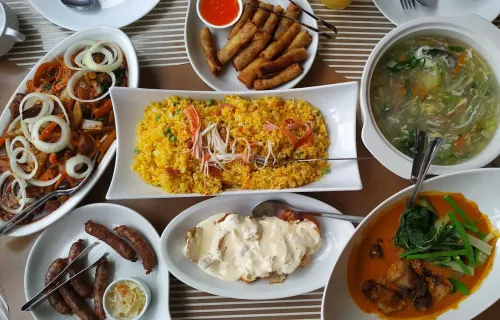
Filipino Food: 12 Essential Dishes (With Tagalog Names)
Filipino food, from adobo to halo-halo: learn the Tagalog names, pronunciations, and ingredients behind 12 dishes you'll want to try on your first trip.

Tagalog vs Filipino: What's the Difference & Which to Learn
Tagalog and Filipino aren't the same language — but they overlap almost completely. Here's the real difference and which one you should actually learn.

Magkano: How to Ask "How Much" in Tagalog
Magkano means how much in Tagalog. Learn to ask a price, tell it apart from ilan and gaano, sound polite with po, and haggle at the palengke.