isalpak
isalpák with stress marks
to cram [it] in
From root: salpak
Conjugations
Past (Completed)
isinalpak
i-si-nal-PAK
crammed in
Present (Incomplete)
isinasalpak
i-si-na-sal-PAK
is being crammed in
Future (Contemplated)
isasalpak
i-sa-sal-PAK
will be crammed in
Usage Note
Isalpak is the object-focus i- form of salpak, foregrounding the item being forced into a space that is barely large enough to accommodate it. It is the natural form when the crammed object — luggage, papers, groceries — is the topic of discussion; pairs with the actor-focus magsalpak.
Examples
" Isalpak mo ang damit sa bag. "
Natural Translation
Cram the clothes into the bag.
Literal Translation
Cram-in you the clothes in bag.
" Masarap isalpak ang malaking piraso ng keyk sa bibig kapag gutom. "
Natural Translation
It is delightful to cram a big piece of cake into your mouth when you're hungry.
Literal Translation
Delightful to cram the big piece of cake in mouth when hungry.
" Dahil puno na ang maleta, napilitan kaming isalpak ang natitirang mga regalo sa isang maliit na supot. "
Natural Translation
Because the suitcase was already full, we were forced to cram the remaining gifts into a small bag.
Literal Translation
Because full already the suitcase, forced we cram-in the remaining gifts in a small bag.
Take Tagalog with you
The full course, a 12,500-word dictionary, and flashcards that make every word stick — free to start on iOS and Android.




Tagalog builds thousands of words from a few hundred roots.
How Tagalog words workWord family
salpak has 1 related form built from the same root.
Related Words
Explore Tagalog by topic
Free guides on grammar, vocabulary, and culture to take you past single-word lookups.
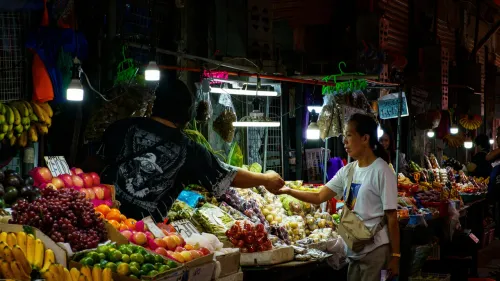
Tagalog Numbers 1-100: Counting, Time & Money Explained
Learn Tagalog numbers 1-100 and beyond. Master both native and Spanish-derived counting systems, plus telling time, reading prices, and ordinals.
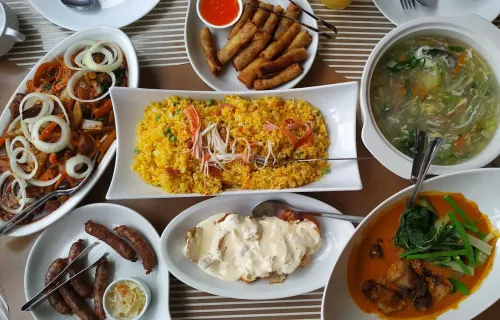
Filipino Food: 12 Essential Dishes (With Tagalog Names)
Filipino food, from adobo to halo-halo: learn the Tagalog names, pronunciations, and ingredients behind 12 dishes you'll want to try on your first trip.
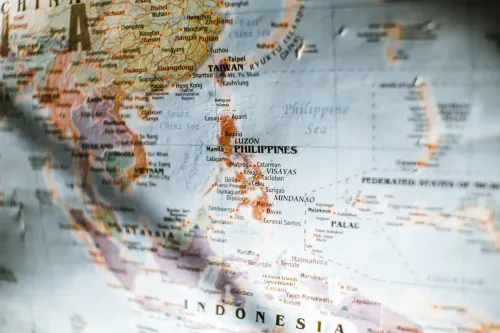
Philippines Geography for Learners: Islands & Language
Philippines geography for Tagalog learners: 7,641 islands, three island groups, and the Southern Luzon heartland where the Tagalog language was born.

Po and Opo in Tagalog: Where to Put Them Right
Po and opo confuse learners — but placement follows one rule. Where po goes in a sentence, why it's opo not 'oo po', and the pronoun shift to learn.