sanaw
sánaw with stress marks
puddle; shallow pool of water
Usage Note
Sanaw describes a small, shallow accumulation of water — typically a puddle left after rain. It is commonly used in everyday speech when describing flooded streets or wet ground after rainfall, a very familiar sight during the Philippine rainy season. Children are often warned not to play in a sanaw for hygiene reasons.
Examples
" May sanaw sa kalsada. "
Natural Translation
There is a puddle on the street.
Literal Translation
There-is puddle on street.
" May sanaw ng tubig sa daan. "
Natural Translation
There is a puddle of water on the road.
Literal Translation
There-is puddle of water on road.
" Pagkatapos ng malakas na ulan, puno ng sanaw ang buong daan papuntang paaralan. "
Natural Translation
After the heavy rain, the entire road to school was full of puddles.
Literal Translation
After of strong rain, full of puddle the whole road going-to school.
Take Tagalog with you
The full course, a 12,500-word dictionary, and flashcards that make every word stick — free to start on iOS and Android.




Tagalog builds thousands of words from a few hundred roots.
How Tagalog words workRelated Words
Explore Tagalog by topic
Free guides on grammar, vocabulary, and culture to take you past single-word lookups.

How to Say Sorry in Tagalog: Patawad vs Pasensya
How to say sorry in Tagalog: patawad, pasensya na, and paumanhin compared on a simple severity-and-formality ladder so you pick the right word every time.

Is Tagalog Hard to Learn? An Honest Answer
Tagalog takes around 1,100 hours to reach professional proficiency. Here is what is easy, what is hard, and what to expect at 3, 6, and 12 months.
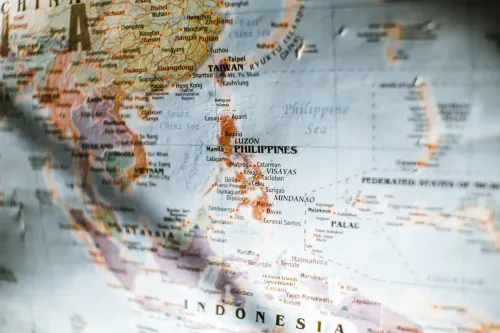
Philippines Geography for Learners: Islands & Language
Philippines geography for Tagalog learners: 7,641 islands, three island groups, and the Southern Luzon heartland where the Tagalog language was born.
Spaced Repetition for Tagalog: How Flashcards Make Words Stick
Cramming Tagalog vocabulary fails. See how spaced repetition — the science behind smart flashcards — makes words stick for the long term.